
Toxicodendron succedaneum
Toxicodendron succedaneum (L.) Kuntze
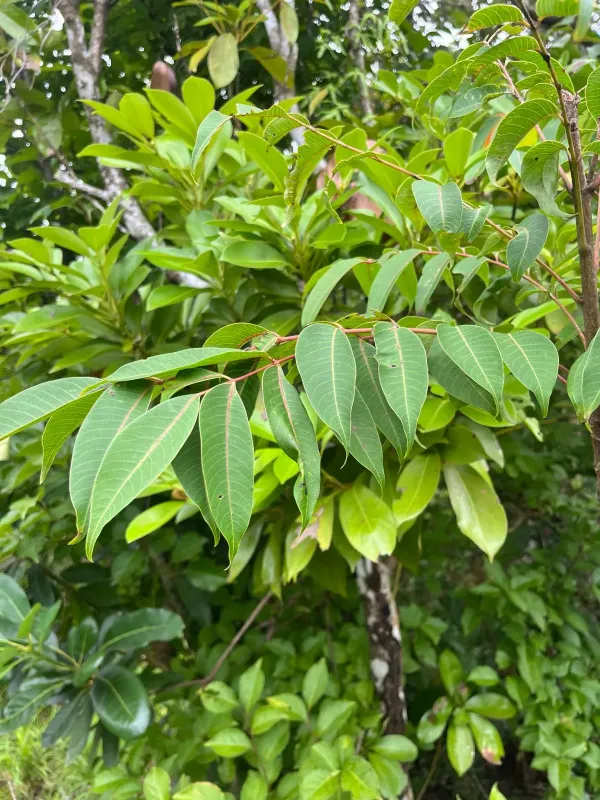
Description
Growing requirements
Toxicodendron succedaneum, widely known as the Japanese wax tree, belongs to the Anacardiaceae family. It is a deciduous tree native to East Asia, including Japan, China, and Korea, where it has historically played a significant role in local rural economies.
The crop thrives in subtropical climates characterized by mild winters and high humidity. It prefers full sun exposure but can adapt to partial shade during its initial growth phases. Protection from strong, drying winds is crucial for maintaining foliage health.
Regarding soil requirements, this species prefers deep, fertile, and well-drained soils. While it can tolerate a range of soil types, it is particularly sensitive to waterlogging, which often results in root rot and decreased vigor of the specimen.
Standard agronomic practices include regular weeding and the application of organic mulch to keep the root zone cool. Periodic pruning is recommended to maintain a manageable canopy size and to facilitate easier access to the fruit clusters during the harvest season.
A critical consideration for growers is the presence of urushiol, an oleoresin found in the sap that causes severe contact dermatitis. Rigorous safety standards, including the use of protective gloves, masks, and long-sleeved clothing, are mandatory during cultivation.
Harvesting
The primary agricultural output of this plant is the vegetable wax produced by the fruit's mesocarp. This wax is a high-value raw material historically used in candle making, soap production, and the manufacturing of high-quality furniture polishes.
Harvesting usually occurs in late autumn when the fruit clusters turn a pale, grayish-yellow color, indicating full maturity. Careful handling during harvest is essential to prevent skin exposure to the tree's irritating sap, which may seep from stems.
The post-harvest process involves drying the fruit and subsequently processing it through steaming or pressing to extract the crude wax. This raw material is then purified to meet industrial standards for various consumer products.
The wood of the tree is also utilized for craft and furniture production due to its attractive grain and durability. However, because of the allergenic nature of the fresh tree, timber processing should only be performed on well-seasoned and dried wood.
Future potential for this crop lies in the increasing demand for sustainable, plant-based waxes. Proper orchard management and efficient extraction techniques remain the key factors for successful commercial production in suitable climatic zones.