
Tortula truncata
Tortula truncata
Description
Growing requirements
Tortula truncata is a small, ephemeral moss species belonging to the Pottiaceae family. It is typically found in habitats characterized by frequent disturbances, such as bare soil surfaces, agricultural field edges, and eroded slopes where competition from higher plants is minimal.
The species has a broad distribution across the temperate regions of the Northern Hemisphere. It thrives in open environments that receive direct sunlight, as it cannot compete effectively with dense vegetation that would overshadow its small, rosette-like structure.
Regarding soil preferences, this moss favors neutral to alkaline conditions, often establishing itself on clay or loamy soils rich in carbonates. It requires moderate moisture levels, particularly during its active growth phases in the cooler, wetter seasons of the year.
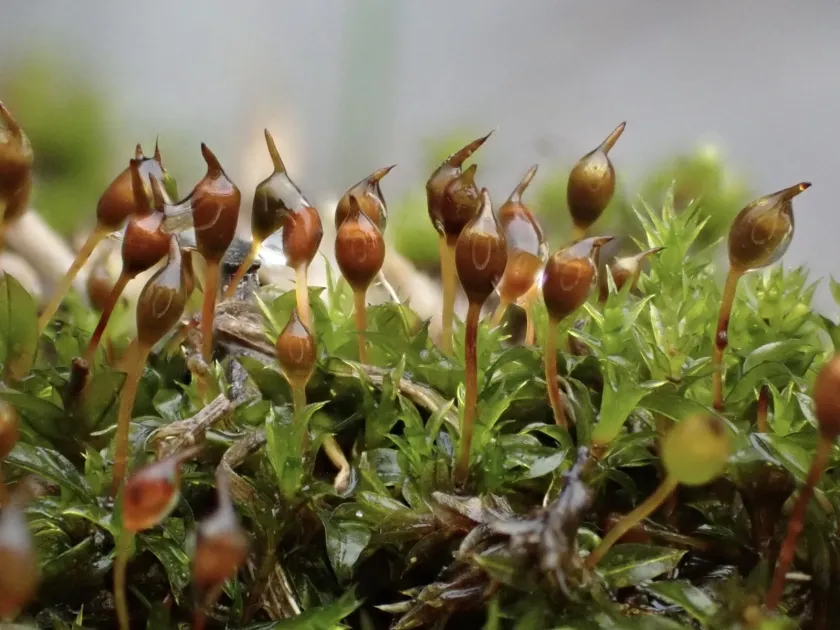
Botanically, the plant consists of short stems with leaves arranged in a distinct rosette. The sporophytes emerge from the center, featuring a characteristic truncated shape, which serves as a key identification marker for bryologists observing this genus in the field.
In terms of ecological utility, Tortula truncata acts as a pioneer species. By colonizing open soil, it helps stabilize surface particles and organic matter, playing a modest but meaningful role in mitigating soil erosion in disturbed areas.
Main diseases and pests
The primary threats to Tortula truncata involve land management practices, specifically intensive cultivation and tillage that disrupt the soil surface and destroy existing moss colonies.
Chemical runoff from agricultural fertilizers and the use of broad-spectrum herbicides pose a significant risk, as mosses are highly sensitive to changes in soil chemistry and the presence of toxic compounds.
Soil compaction caused by heavy machinery alters the microtopography and moisture retention capacity of the substrate, making it unsuitable for the growth and reproduction of this species.
Vegetation succession is another major threat; as field edges or disturbed patches become overgrown with larger, more competitive weeds, the moss is gradually shaded out and eliminated from the site.
Climatic factors, such as extended periods of drought or unseasonably high temperatures, can inhibit the life cycle of this annual moss, as it relies on surface humidity to facilitate spore germination and growth.