
Knotted hedge-parsley
Torilis nodosa (L.) Gaertn.
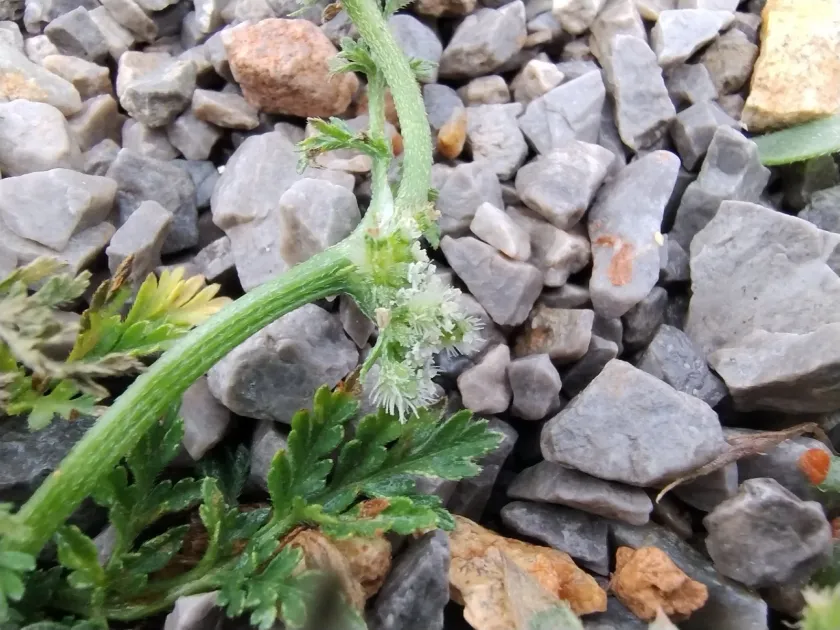
Description
Growing requirements
Knotted hedge-parsley (Torilis nodosa) is a member of the Apiaceae family. It is an annual herbaceous plant widely recognized in agriculture as a persistent weed found in field margins and cultivated crops.
The plant thrives in varied environments, showing a preference for temperate climates. It is highly adaptable to both heavy clay soils and lighter, sandy textures, provided the area offers sufficient sunlight exposure.
Native to the Mediterranean region and parts of Eurasia, it has naturalized in many other regions worldwide. Its presence is often noted in disturbed soils, making it a common sight in recently tilled fields.
Botanically, it is distinguished by its small, dense clusters of umbels and hooked, bristly seeds. This morphological feature allows the seeds to cling to machinery and animal fur, ensuring rapid dispersal across farmland.
While the plant serves no major agricultural purpose, its ecological role involves competing with crops for essential soil nutrients, leading to decreased yields if left unmanaged during the early growing season.
Main diseases and pests
The primary agricultural threat posed by Torilis nodosa is its role as an alternative host for pests and diseases. It can harbor various viruses and fungi that negatively impact major crops within the same botanical family.
Diseases such as powdery mildew and various leaf spots are frequently found on this species, which can spread to commercial carrot or parsley crops if they are growing in adjacent plots.
Insects, particularly aphids and various bug species, often utilize this plant for overwintering. This increases the pest pressure on surrounding cultivated areas, requiring integrated pest management strategies.
Management of this weed is best achieved through mechanical methods such as hoeing or shallow tillage before the plants reach the flowering stage. Preventing seed set is the most effective way to reduce the population.
Chemical control involving selective herbicides is used in intensive agriculture. However, resistance management is essential to prevent the buildup of tough-to-control weed populations in large-scale farming operations.