
Tilingia ajanensis
Tilingia ajanensis
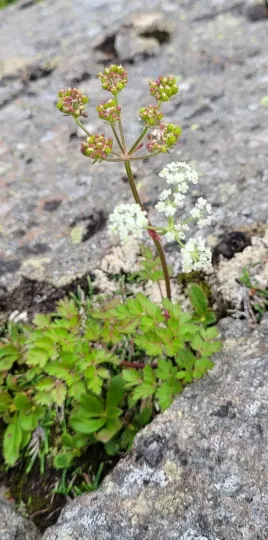
Description
Sowing dates
Tilingia ajanensis belongs to the Apiaceae family and is a perennial herb well-adapted to high-latitude and mountainous environmental conditions.
Seed sowing is best performed in late autumn to ensure natural stratification, which is essential for uniform germination in the following spring.
For spring sowing, seeds require artificial stratification at low temperatures for 45 days to break dormancy effectively.
Seeds should be sown at a shallow depth of 1-2 cm, as they are sensitive to excessive soil coverage which can impede emergence.
Proper spacing is required, with row intervals of 45-60 cm, allowing for sufficient vegetative growth and ease of maintenance.
Growing requirements
This crop prefers consistently moist, well-drained soils rich in organic matter to support its vigorous perennial growth cycle.
It is a cold-hardy species, capable of thriving in temperate regions with harsh winters, requiring no additional protection once established.
While it tolerates partial shade, the best results in biomass production are achieved in areas with moderate sunlight and good air circulation.
The soil should have a neutral pH; heavily compacted or waterlogged soils must be amended with organic matter to improve aeration.
Regular weeding and moisture management are key, as young seedlings compete poorly with aggressive weeds during the first year of establishment.
Main diseases and pests
Fungal diseases, specifically root rots and leaf spots, are the primary threats when soil drainage is inadequate or humidity is too high.
Aphids represent the main insect pest, potentially causing damage to the soft tissues of developing foliage during warm, dry spells.
Umbelliferous moths can pose a risk to seed production by feeding on the floral structures, thus reducing the yield of viable seeds.
Crop rotation practices and the removal of plant debris are recommended to minimize the accumulation of pathogens in the soil.
Integrated pest management strategies focusing on biological controls are preferred to maintain the health of the plantation without heavy chemical use.