
Thismia saulensis
Thismia saulensis
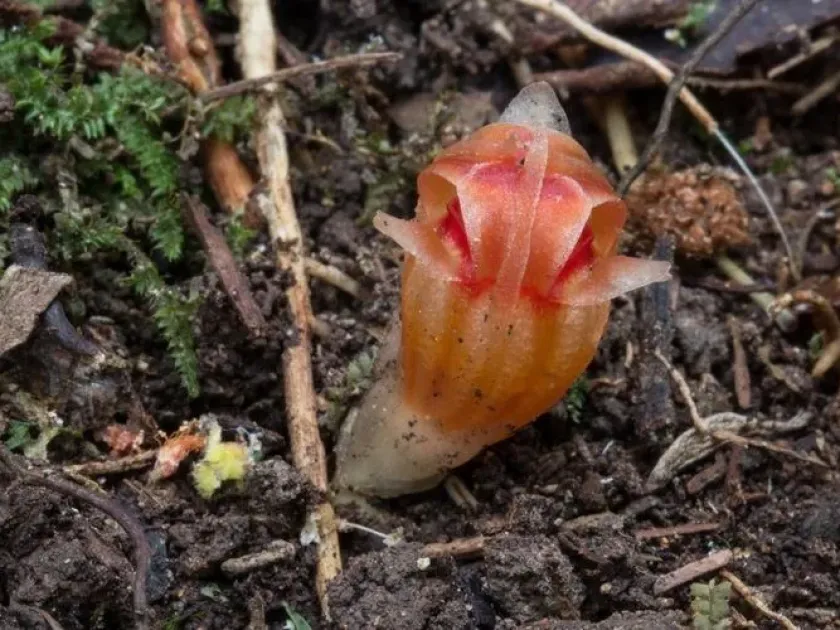
Description
Growing requirements
Thismia saulensis belongs to the Burmanniaceae family and is recognized as a rare mycoheterotrophic plant. It survives without photosynthesis by forming complex symbiotic relationships with fungi in the forest floor.
The species is native to tropical rainforests, with initial discoveries recorded in French Guiana. Its natural habitat is strictly confined to areas with thick leaf litter, providing the necessary protection and fungal networks for its growth.
Agronomic cultivation of Thismia saulensis is currently impossible as it lacks chlorophyll and relies entirely on external carbon sources provided by its fungal hosts. It cannot be integrated into standard agricultural production systems.
The plant requires precise microclimatic conditions, including high humidity and stable tropical temperatures. Changes in soil composition or the disruption of fungal colonies in the rhizosphere are fatal to this delicate species.
There is no commercial application for this species in modern agriculture. It remains a subject of botanical interest, valued primarily for its evolutionary adaptation as a specialized, non-photosynthetic organism within the ecosystem.