
Bent alligator flag
Thalia geniculata
Description
Growing requirements
Thalia geniculata, commonly known as bent alligator flag, is an aquatic perennial plant belonging to the Marantaceae family. It is native to the wetlands and marshy areas of the tropical Americas, ranging from Florida to South America.
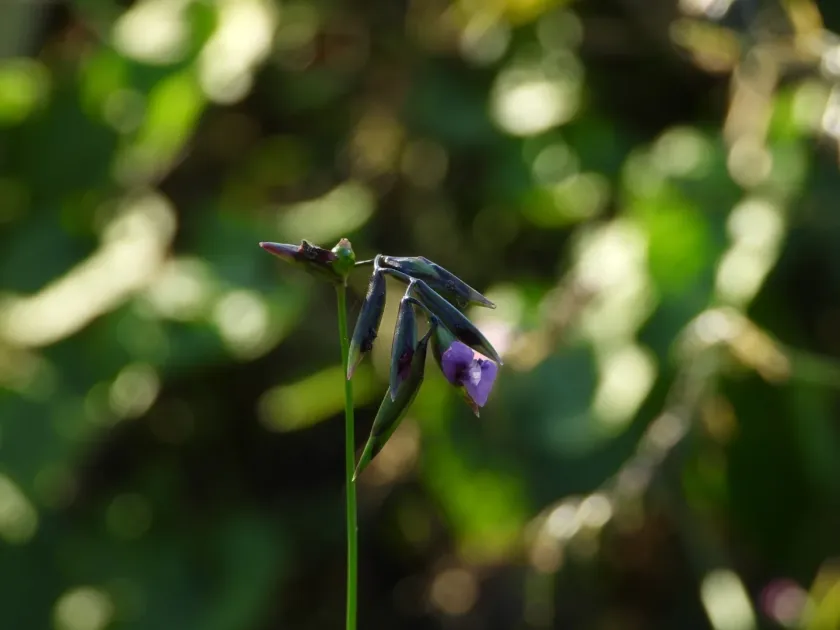
The plant is prized for its tall, reed-like appearance and its dramatic, nodding panicles of purple-violet flowers. It grows from a thick, creeping rhizome that thrives in saturated or submerged conditions, making it an excellent choice for wetland restoration and large water features.
Regarding climate, this species is highly sensitive to frost. While it can be grown in temperate zones during the summer months, it requires warm temperatures ranging from 20 to 30 degrees Celsius to maintain active growth and bloom cycles.
The soil should be nutrient-rich, ideally composed of organic muck or clay-based sediment. The plant can handle water depths of up to 30 centimeters, provided the crown of the plant remains well-positioned to allow for leaf emergence.
Maintenance is relatively straightforward: the plant requires full sun to partial shade. In residential gardens, it serves as a stunning focal point in ponds, contributing to both the aesthetic value and the natural filtration of the water body.
Main diseases and pests
Thalia geniculata is generally robust and resilient; however, it can be susceptible to spider mites in indoor or greenhouse settings where the humidity is not sufficiently high.
Fungal issues may arise if the plant is grown in stagnant water with poor circulation, or if dead organic matter is allowed to accumulate around the rhizome base.
Leaf spot diseases can occur under conditions of extreme heat combined with high humidity, necessitating proper spacing between plantings to improve air circulation.
Nutrient deficiency is another common issue, particularly in containerized plants; regular fertilization with slow-release tablets designed for aquatic vegetation helps maintain vibrant growth.
Root rot can become a problem if the soil medium lacks proper aeration, despite the plant's natural preference for waterlogged conditions, so a balance of muddy, nutrient-rich substrate is vital.