
Ginger bush
Tetradenia riparia
Description
Growing requirements
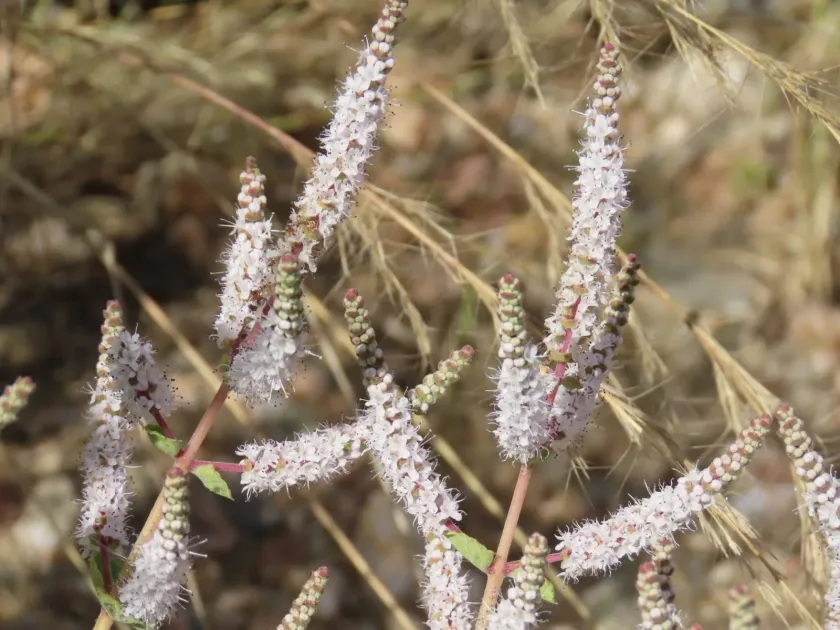
The Ginger bush (Tetradenia riparia) is a fast-growing deciduous shrub belonging to the Lamiaceae family. Native to tropical Africa, this plant is well-known for its aromatic foliage and attractive flower spikes that emerge during the cooler months.
Botanically, it features succulent-like stems and heart-shaped leaves that exude a distinct, spicy fragrance when crushed. The plant typically reaches a height of 2 to 3 meters in its natural habitat, making it a prominent feature in garden landscapes.
Environmental requirements include a frost-free climate with plenty of bright, indirect sunlight. In regions with freezing winters, the Ginger bush must be kept in containers and moved indoors to ensure its survival throughout the cold season.
Soil quality should prioritize drainage to prevent root rot. A nutrient-rich, loamy soil mix works best for container-grown plants, ensuring that excessive water can easily escape through drainage holes.
Regular maintenance involves light pruning after flowering to encourage dense, bushy growth for the following season. This cultural practice keeps the plant compact and prevents it from becoming too leggy or woody.
Main diseases and pests
Common pests that target the Ginger bush include spider mites, aphids, and whiteflies. These insects thrive in dry indoor conditions and can quickly infest the undersides of the leaves if not monitored regularly.
Fungal diseases, including powdery mildew, can appear if the plant is kept in an environment with poor airflow and high humidity. Ensuring proper spacing between plants is essential for effective ventilation.
Root rot is the most significant threat caused by overwatering. It is crucial to allow the top layer of the soil to dry out between watering sessions to maintain healthy, active roots throughout the year.
To control pests naturally, growers often use insecticidal soaps or neem oil, which are effective while minimizing the impact on the plant's essential oils. Always test a small area before full-scale application.
Preventative measures include regular inspection of new growth and maintaining general cleanliness in the growing area. Healthy plants with access to adequate light and balanced nutrition show a high natural resistance to most common diseases.