
Tessmannia anomala
Tessmannia anomala
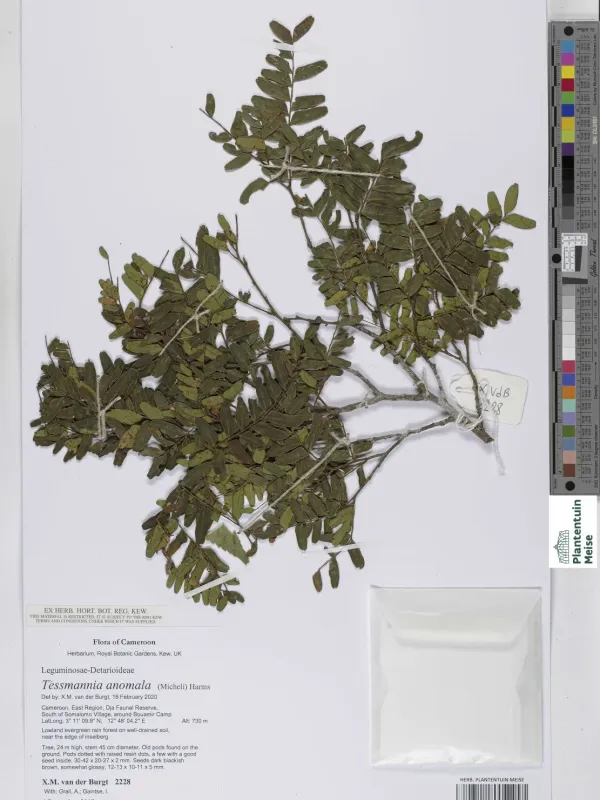
Description
Growing requirements
Tessmannia anomala is a leguminous tree species belonging to the Fabaceae family, specifically the Caesalpinioideae subfamily, native to the tropical rainforests of Central Africa.
The plant thrives in humid tropical environments characterized by high annual temperatures and constant moisture, which are essential for its successful development.
It prefers well-drained, nutrient-rich soils typically found in equatorial regions, where it benefits from the natural recycling of organic forest debris.
Cultivation practices should prioritize replicating the natural forest canopy, as saplings require moderate shading to prevent heat stress and desiccation.
This species is valued not only for its timber qualities but also for its ecological role as a nitrogen-fixing plant that enriches the soil ecosystem.
Main diseases and pests
Common threats to Tessmannia anomala populations include various wood-boring insects and beetle larvae that can cause significant damage to the trunk and bark.
Fungal pathogens represent a major concern, particularly in high-humidity conditions, often leading to root decay or leaf blight in young, vulnerable trees.
Invasive plant species and aggressive climbing vines often compete with Tessmannia saplings for access to sunlight, which is a limiting factor in dense forests.
Deforestation and habitat fragmentation remain the most severe threats, leading to decreased genetic diversity and reduction of the species' natural range.
Effective management requires regular phytosanitary inspections and sustainable forestry practices to minimize the impact of human activity on these tropical trees.