
Telfairia pedata
Telfairia pedata
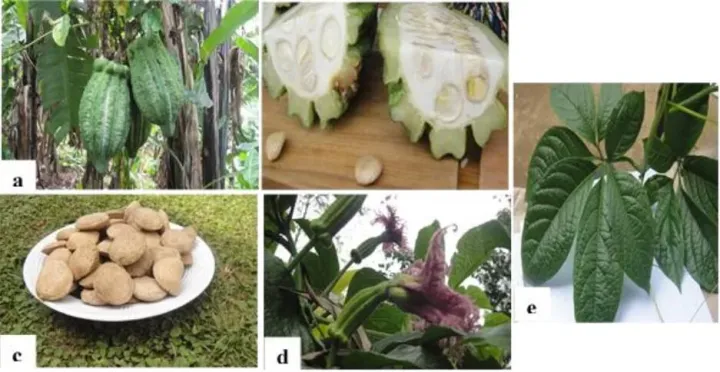
Description
Sowing dates
Telfairia pedata, commonly known as the oyster nut, is a perennial dioecious vine belonging to the Cucurbitaceae family. Sowing is typically aligned with the onset of the rainy season to ensure moisture availability for initial development.
Seeds should be planted at a depth of approximately 5 cm. Given the aggressive growth habit of the vine, spacing should be generous, with at least 3 meters between individual pits to accommodate future expansion.
Providing robust trellising systems is essential for commercial production, as it allows the vines to climb, promotes better air circulation, and keeps the heavy fruit off the ground.
Germination is most successful in warm, tropical conditions. The seeds should be handled with care, as they have a relatively short shelf life once removed from the fruit shell.
Pre-soaking seeds for 12–24 hours before planting can significantly improve germination rates, especially if the outer coat has started to harden during storage.
Growing requirements
The crop requires a tropical climate with consistent temperatures between +20°C and +30°C. It is extremely sensitive to frost and cold winds, which can kill the plant or stunt its growth permanently.
Well-drained, fertile, and organic-rich soils are preferred. The plant performs poorly in heavy, clay-based soils that are prone to waterlogging, as the roots are highly susceptible to decay.
Telfairia pedata demands full sun exposure to maximize photosynthetic activity and fruit yield. Partial shade is only acceptable during the initial seedling stage.
Maintaining a neutral pH (around 6.5) is ideal. Regular applications of organic mulch are recommended to retain soil moisture and suppress weed growth around the root zone.
Protection from high wind speed is crucial, as the large leaves of the vine can tear easily, reducing the plant's overall vigor and physiological performance.
Yield
The yield potential of Telfairia pedata is substantial, with a single healthy vine producing numerous massive fruits. Each fruit can contain up to 200 large seeds, which are highly prized for their oil content.
Productivity typically peaks after the second year of growth. When properly managed on stable supports, a well-tended plantation can remain productive for several years.
Pollination is a key factor in yield stability. Since it is a dioecious plant, having an adequate ratio of male to female flowers is essential, often managed by keeping enough plants in the field.
Regular pruning of unproductive or excessively dense branches encourages the plant to direct its energy towards fruit development rather than excessive foliage growth.
Nutrient management, particularly potassium, plays a vital role in the weight and quality of the seeds harvested from each fruit batch.
Main diseases and pests
Powdery mildew represents the most significant fungal threat, thriving in humid environments where airflow is restricted. It can rapidly cover the leaves, leading to reduced yield.
Pests like aphids and spider mites can colonize the soft tips of the vines, causing stunted growth and transmitting viral diseases that are difficult to manage.
Root-knot nematodes can severely affect the root system, leading to wilting and reduced nutrient uptake, which is why crop rotation is recommended.
Root rot is a common issue caused by poor drainage or overwatering, often resulting in sudden plant death during the wettest months of the year.
- Implementing integrated pest management (IPM) practices.
- Removing and burning infected plant debris.
- Ensuring proper planting distances to promote canopy ventilation.
Harvesting
Harvesting should occur when the fruits reach physiological maturity, indicated by a change in skin color and the drying out of the peduncle or vine connection point.
Using sharp tools to sever the fruit is necessary to avoid causing mechanical damage to the main stem of the vine, which could serve as an entry point for pathogens.
After collection, fruits are often stored for a few days to soften slightly, making it easier to extract the seeds without damaging their delicate outer layers.
Seeds must be dried immediately after extraction in a shaded, well-ventilated area. Improper drying can lead to rancidity of the oil and loss of germination potential.
Once dried, the seeds are ready for market or immediate processing, maintaining their high nutritional value for human consumption and industrial oil extraction.