
Teesdalia coronopifolia
Teesdalia coronopifolia
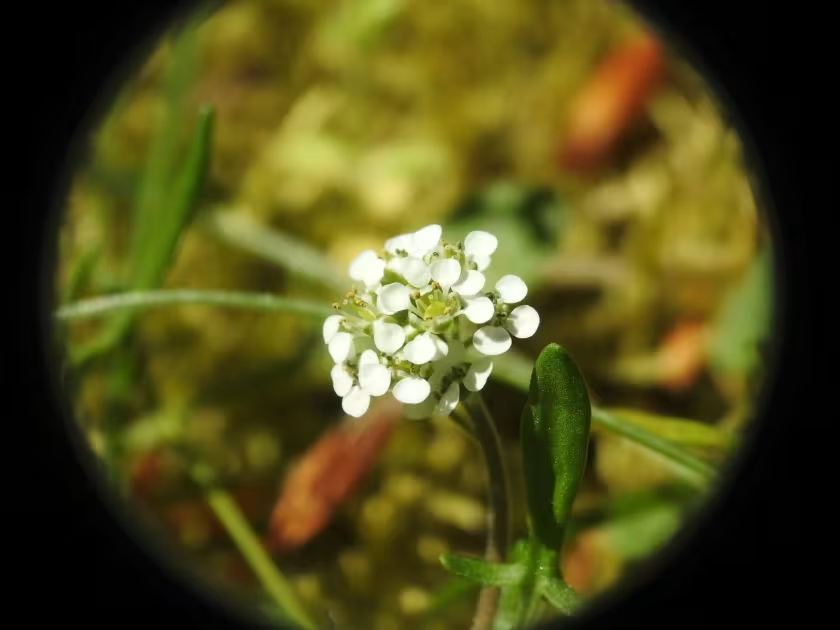
Description
Sowing dates
Teesdalia coronopifolia is an annual herbaceous plant that typically starts its life cycle from seed germination in autumn or early spring. The timing of sowing is critical and should coincide with favorable moisture levels in the soil to ensure uniform germination.
Seeds should be sown at a shallow depth of 0.5–1 cm. Given their small size, they require a firm seedbed with good moisture retention to prevent the embryos from drying out during the initial establishment phase.
For agricultural purposes, precision sowing is recommended to maintain the optimal plant population density. This ensures that individual plants have sufficient space to develop their characteristic rosette and subsequent flowering stems.
The plant adapts well to various sowing dates, but autumn sowing in regions with mild winters often allows for better root development. This creates a stronger foundation for the plant to thrive when the main growth phase begins in spring.
Proper field preparation, including light harrowing, helps to remove competing early weeds and creates the ideal soil structure for the tiny seeds to take root effectively.
Growing requirements
Belonging to the Brassicaceae family, Teesdalia coronopifolia thrives in light, well-drained soils, such as sandy loams. It has a high tolerance for nutrient-poor substrates, which allows it to be utilized in diverse environmental settings.
Light is a primary requirement for this crop. It demands full sun exposure to maintain its compact growth habit and to maximize the production of flower stalks. Insufficient light leads to etiolation and poor reproductive success.
The plant demonstrates a preference for moderate moisture levels. While it is hardy and can withstand short periods of drought, consistent water availability during the peak vegetative stage is necessary for high biomass accumulation.
Optimal soil pH for the species falls between 6.0 and 7.0. While it is not overly demanding, ensuring that the soil is not excessively acidic will promote better nutrient uptake and increase overall plant vigor against environmental stress.
The climate requirements include moderate temperatures. The species is capable of surviving minor frosts, which is a significant advantage in areas where weather fluctuations are common during the spring season.
Main diseases and pests
Flea beetles are the primary pests affecting this species, particularly during the seedling stage. These insects can cause significant leaf damage, necessitating integrated pest management strategies, including the use of targeted insecticides.
The plant is susceptible to various fungal pathogens typical of the Brassicaceae family, such as clubroot or white rust. These diseases are most prevalent in conditions with poor drainage and excessive moisture, making field management essential.
Aphids represent a secondary threat by feeding on the sap of developing stems and acting as potential vectors for plant viruses. Regular field scouting is vital to detect infestations before they reach economic threshold levels.
Competition from aggressive weeds can easily overwhelm young plants. Since Teesdalia coronopifolia grows relatively slowly in its initial phase, early-stage weeding is crucial to ensure the crop has access to light and nutrients.
Cultural practices, such as strict crop rotation, are the most effective way to prevent the build-up of soil-borne pathogens. Avoiding fields where related mustard family crops were recently grown significantly lowers the disease pressure.