
Teak
Tectona grandis L. f.
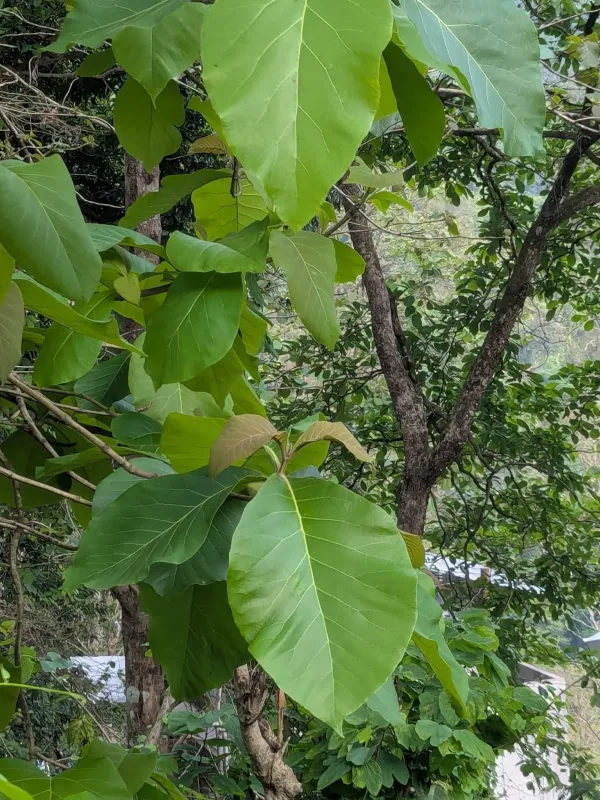
Description
Sowing dates
The propagation of teak begins with the careful selection and pretreatment of seeds. Because teak seeds have a hard, water-repellent shell, they often require soaking or alternating temperature treatments to break dormancy and ensure high germination rates.
Seeds are typically sown in professional forest nurseries. This allows for the production of healthy, uniform seedlings that are better prepared for transplanting into the field, ensuring a higher survival rate during the initial growth stages.
The planting phase is timed to coincide with the onset of the monsoon season. High soil moisture is critical during the first few weeks after planting to help the saplings establish a robust root system before the dry season arrives.
Standard spacing in plantations usually ranges between 2x2 and 3x3 meters. This density helps promote vertical growth and forces the trees to shed lower branches, which is essential for producing high-quality, knot-free timber.
During the first three years, manual or mechanical weeding is essential to prevent competitive vegetation from suppressing the young teak trees. Providing an environment free from competition allows the trees to dedicate all their energy to rapid height growth.
Growing requirements
Teak (Tectona grandis L. f.) is a deciduous tropical hardwood belonging to the family Lamiaceae. It is native to the forests of South and Southeast Asia and thrives in regions characterized by distinct wet and dry seasons.
The species requires a warm climate with temperatures typically between 22 and 38 degrees Celsius. It is highly sensitive to frost and does not tolerate low temperatures, making it strictly a tropical or subtropical forest crop.
Soil quality is paramount for teak; it demands deep, fertile, and well-drained alluvial soil. Soils with a pH between 6.0 and 7.5 are considered ideal. Poorly drained soils or waterlogged areas often lead to stunted growth and root diseases.
Teak is a strongly light-demanding species. It requires full sunlight to achieve optimal growth rates and to develop straight, cylindrical trunks. In areas with insufficient light, the tree will grow slowly and may develop an undesirable, crooked form.
Management practices include regular pruning and thinning. Removing branches while the tree is young ensures the production of high-value timber, while thinning operations later in the cycle ensure that the best trees have enough space to mature.
Yield
Teak wood is world-renowned for its durability, water resistance, and beauty. Its natural oils protect it against decay, fungi, and termites, making it the preferred choice for marine decking, luxury furniture, and outdoor construction.
The rotation period for teak plantations can vary from 20 to 50 years depending on the site conditions and the desired timber size. Intensive management allows planters to reach harvestable diameters much faster than in natural forests.
Economic yields are improved by implementing systematic thinning. By removing inferior or competing trees throughout the rotation, the overall quality and value of the final harvest are significantly increased.
Global demand for teak remains strong, particularly for certified sustainable plantations. Teak is considered a high-value asset, offering significant long-term returns for forestry investors who manage their lands with professional care.
The value of the harvest is determined by wood density, color, and lack of knots. Proper processing, including kiln drying, ensures that the wood remains stable and resists cracking, maximizing its marketability for international buyers.
Main diseases and pests
Teak plantations are susceptible to insect attacks, most notably the teak defoliator (Hyblaea puera) and the teak skeletonizer (Eutectona machaeralis). These pests can strip leaves, leading to reduced photosynthesis and slower growth rates.
Root rot caused by various soil-borne fungi is a significant threat, especially in areas with poor drainage. Once established, these diseases can be difficult to manage, making preventative soil management a top priority.
Parasitic plants, such as mistletoe, can weaken the trees by competing for water and nutrients. Regular plantation surveys are necessary to identify and remove these parasites before they cause significant damage to the canopy.
Animal browsing and mechanical damage to the bark by wild or domestic animals can introduce secondary bacterial infections. Fencing and proper site maintenance are key strategies to protect the health of the young trees.
Integrated pest management (IPM) is increasingly used to mitigate these risks. This approach combines biological control agents with selective use of chemicals to maintain plantation health while minimizing environmental impact.
Harvesting
Harvesting teak requires careful planning and specialized heavy machinery to fell trees without damaging the surrounding environment. The objective is to extract the timber while preserving the soil structure and avoiding damage to adjacent trees.
Post-harvest management involves cross-cutting the logs into desired dimensions. Immediate treatment of the cut ends helps to prevent moisture loss and subsequent cracking, ensuring the value of the harvested material is preserved.
Logistics play a critical role in the harvesting cycle. Efficient transport systems are necessary to move heavy logs from the plantation to processing centers quickly, preventing the wood from being exposed to harsh weather conditions.
Sorting and grading the harvested timber based on international quality standards is essential for achieving the best market price. High-quality teak logs are separated from lower-grade wood intended for local construction or pulp.
The harvest cycle is completed by replanting the cleared area. Sustainable forest management requires immediate reforestation to ensure that the land remains productive and that the ecological balance of the area is maintained for future generations.