
Java moss
Taxiphyllum barbieri
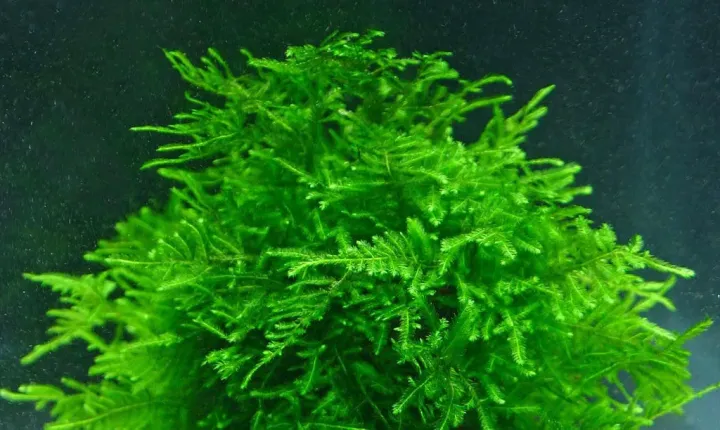
Description
Growing requirements
Java moss (Taxiphyllum barbieri) belongs to the Hypnaceae family. It is a highly resilient aquatic bryophyte originating from the tropical regions of Southeast Asia, thriving in the warm and humid climates of countries like Indonesia and Vietnam.
The plant performs best in a temperature range of 15–28°C. It is remarkably adaptable to various water hardness levels, though it prefers clean, well-oxygenated water to maintain its vibrant green color and structural integrity.
Lighting requirements are flexible, ranging from low to high light intensity. However, excessive lighting is often avoided to prevent the growth of competitive nuisance algae, which can quickly overpower the moss colony.
Java moss thrives when attached to hardscapes such as driftwood, rocks, or synthetic mesh pads. It uses small structures called rhizoids to anchor itself firmly to surfaces, allowing for the creation of lush, dense underwater carpets.
While the moss can absorb nutrients directly from the water column, supplemental liquid fertilizers can significantly boost growth rates. It does not require CO2 injection, but its addition often results in more robust and denser foliage development.
Yield
Java moss is a staple crop in the aquarium hobby and commercial aquatic plant industry. Due to its ease of propagation, it represents a highly productive crop capable of generating regular harvests for retail and wholesale markets.
Yield is measured by the rapid biomass accumulation over short growth cycles. In optimal conditions, the plant can double its volume in as little as 2 to 3 weeks, offering high turnover rates for professional nurseries.
Harvesting involves pruning or splitting the moss mats, which effectively serves as a propagation technique. The harvested portions can be immediately repotted or attached to new substrates for further grow-out cycles.
Beyond its decorative value, the moss acts as a vital spawning medium and refuge for fish fry and invertebrates. This ecological function adds significant market value, making it a preferred choice for breeders and hobbyists alike.
Large-scale production often utilizes flow-through systems and specialized trays to maintain water quality and provide consistent environmental parameters. This modern approach ensures high-quality, pest-free product output for large orders.
Main diseases and pests
The most significant threat to Java moss cultivation is the infestation of filamentous algae. These invasive organisms compete aggressively for space and light, easily smothering the moss if not managed through proper filtration and maintenance.
Accumulated organic debris trapped within the dense moss mats can lead to localized hypoxia and decay. Regular water changes and mechanical cleaning are necessary to maintain the health of the lower levels of the moss colony.
Insufficient lighting causes the plant to become etiolated, sparse, and pale. Monitoring the photoperiod and ensuring that light reaches all parts of the moss are critical steps in preventing the degradation of the plant's aesthetic appeal.
The use of harsh chemical treatments or aggressive algaecides in the cultivation area can severely damage the delicate tissues of the moss. Integrated pest management strategies are preferred to ensure the plant's safety.
Certain herbivorous species, such as specific snails or fish, can feed on the moss if the aquarium environment is not managed correctly. Compatibility checks are essential when integrating the moss into mixed-species production systems.