
Jewels of Opar
Talinum paniculatum (Jacq.) Gaertn.
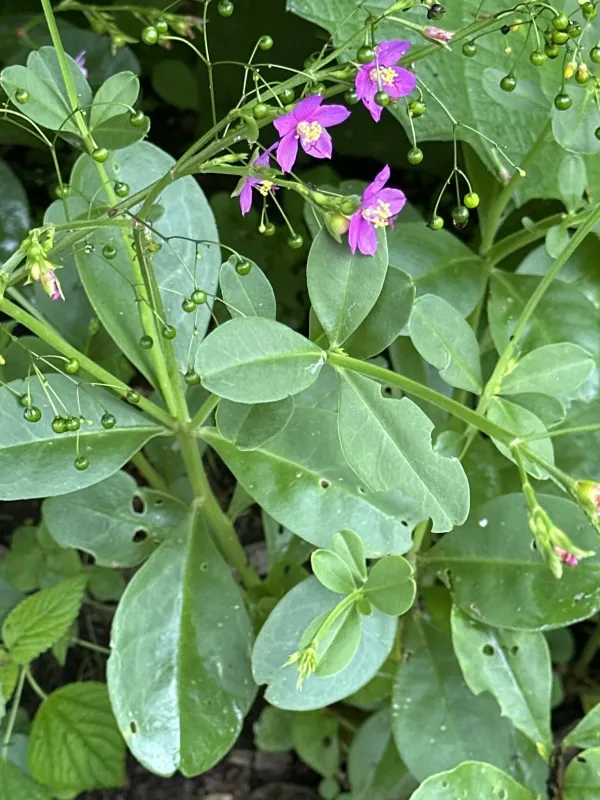
Description
Sowing dates
Jewels of Opar is a heat-loving plant that should be sown outdoors only when the soil has completely warmed up and the risk of frost has passed.
In regions with shorter growing seasons, starting seeds indoors or in a greenhouse 4-6 weeks before the last frost date is highly recommended for earlier harvests.
Seeds should be sown on the surface of the soil, as they require light to germinate effectively, and should be pressed firmly but not deeply covered.
An optimal temperature for germination ranges between 22 and 25 degrees Celsius, ensuring vigorous and uniform seedling development.
Once seedlings have developed their first true leaves, they should be transplanted to their permanent location with adequate spacing to promote airflow.
Growing requirements
Belonging to the Talinaceae family, this plant thrives in full sun but can tolerate partial shade, particularly in areas with intense midday heat.
The soil must be well-drained, fertile, and rich in organic matter to support the rapid growth of succulent foliage throughout the season.
Although it possesses drought-tolerant qualities, Jewels of Opar requires consistent moisture during its peak growth phase to maintain leaf tenderness.
Proper soil drainage is essential, as waterlogged conditions can lead to root rot and other moisture-related diseases that severely impact plant health.
Regular maintenance, including weeding and thinning, ensures that the plants have sufficient space to reach their full potential without competition.
Yield
The primary agricultural use of Talinum paniculatum is as a leafy vegetable, prized for its ability to produce fresh greens even in the heat of summer.
The plant is gaining popularity as a nutrient-dense food source, containing significant amounts of vitamins and essential minerals for a healthy diet.
Beyond its culinary value, the plant is valued in medicinal traditions for its potentially healing properties, often processed into extracts or tinctures.
Its ornamental, panicle-like inflorescences make it an attractive plant for landscape designs, serving both functional and aesthetic purposes in the garden.
Continuous harvesting of the leaves promotes branching and prevents premature flowering, thereby extending the productive season of the crop.
Main diseases and pests
Slugs and snails are the most common pests, as they are attracted to the succulent, moisture-filled leaves during periods of high humidity or rain.
Poorly drained soils or excessive watering may lead to root rot, which is caused by soil-borne pathogens that can devastate an entire crop.
In indoor or greenhouse settings, infestations of aphids or spider mites can occur, necessitating regular monitoring and integrated pest management.
Good cultural practices, such as ensuring proper spacing and removing debris from the field, are vital for preventing the spread of diseases.
Since the plant is intended for consumption, chemical controls should be avoided in favor of organic or biological pest management strategies.
Harvesting
Leaf harvesting typically begins 60 to 75 days after sowing, once the plant has developed a sufficient amount of edible biomass.
The leaves should be picked individually or by trimming outer stems, allowing the central part of the plant to continue producing fresh growth.
If harvesting for medicinal purposes, the roots can be carefully dug up at the end of the season, washed, and dried in a cool, ventilated space.
For seed production, allow the delicate panicles to mature until the capsules darken, then harvest carefully to prevent the seeds from scattering.
Post-harvest management is crucial, as the leaves have high water content and should be refrigerated immediately to maintain their freshness.