
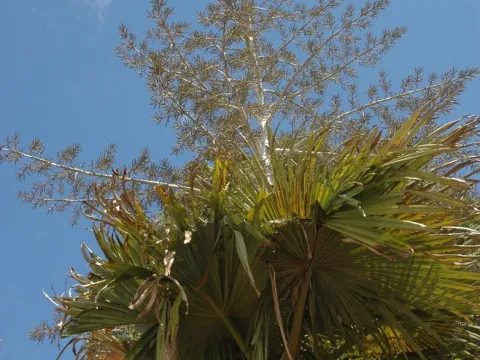
Tahina
Tahina J. Dransf. & Rakotoarin.
Tahina (lat. Tahina spectabilis) is a unique monotypic genus of palms from the Arecaceae family. This plant was discovered by scientists only in 2007 in the northwestern part of Madagascar, in the Analalava region.
What the section contains

Tahina
In its natural habitat, this palm grows in limited areas with limestone soils. Its range is extremely small, making the species highly vulnerable and at risk of extinction in the wild.
Biologically, Tahina spectabilis is a hapaxanthic plant, meaning the palm blooms and fruits only once in its life, after which it inevitably dies. This event marks the end of the tree's long life cycle.
The plant has specific climatic requirements: it needs tropical conditions with high humidity and stable warm temperatures. It is not grown in agriculture or on an industrial scale due to its extreme rarity and specific biological traits.
When cultivated in botanical gardens, the palm requires fertile, well-drained soil and protection from strong winds. Due to its slow growth rate, seedlings require careful maintenance and strict adherence to temperature regimes.
The main threat to the Tahina spectabilis population is the destruction of its natural habitat due to land-use changes and fires in Madagascar.
Under cultivation conditions (in botanical collections), the plant is susceptible to attacks by typical palm pests, such as palm weevils or scale insects, if phytosanitary rules are not followed.
Fungal diseases of the root system can develop with excessive watering and lack of proper drainage in the soil mix.
Micronutrient deficiencies in the substrate are also a common problem, causing leaf chlorosis in young palm specimens.
Since the species is very rare, any pathogens can be fatal to the entire population, which is why strict quarantine measures are maintained in botanical gardens.