
Tahina palm
Tahina spectabilis J. Dransf. & Rakotoarin.
Description
Growing requirements
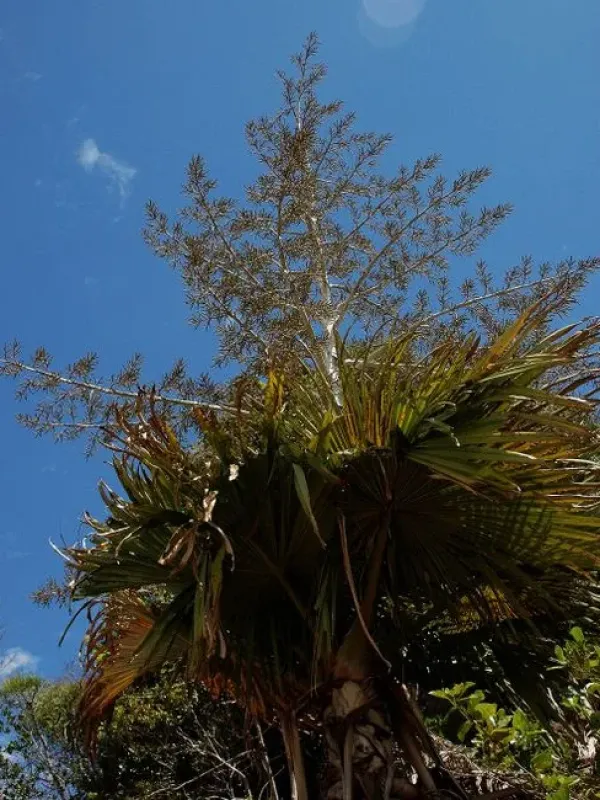
The Tahina palm (Tahina spectabilis) is a giant palm species belonging to the Arecaceae family, endemic to the northwestern part of Madagascar. This species was formally described only in 2008 and is considered extremely rare in the wild.
The plant prefers a tropical climate with a distinct wet season. In its natural habitat, it grows on well-drained limestone soils, a factor that must be considered when attempting cultivation in greenhouses or specialized nurseries.
Botanically, the crop is unique for its life cycle: the palm is hapaxanthic, meaning it flowers and fruits only once in its lifetime, after which it dies. The trunk can reach heights of up to 18 meters, with a leaf fan diameter of up to 5 meters.
Successful growth requires high temperatures and an absence of frost. The root system is sensitive to waterlogging, making it critical to provide high-quality drainage in a substrate that closely mimics limestone-rich soils.
Commercial and agricultural use of the species is currently limited to ornamental horticulture and biodiversity conservation in botanical gardens, as the plant is threatened with extinction in its natural range.
Main diseases and pests
Primary threats to population survival include the loss of natural habitats due to human impact, deforestation, and the agricultural development of Madagascar's land.
Under cultivation, palms are susceptible to attacks from common family pests, such as spider mites and scale insects, especially if air humidity parameters in greenhouses are not maintained.
Fungal root infections can develop during excessive irrigation and poor soil aeration. Regular inspection of leaf surfaces for pathogens is highly recommended for health management.
The lack of natural pollinators in artificial environments complicates the acquisition of viable seeds, which restricts the spread of the species among botanical collectors.
Climate change in the regions of origin negatively affects the life cycle of this slow-growing plant, necessitating state-level conservation and protection measures.