
Asian skunk cabbage
Symplocarpus renifolius
Description
Sowing dates
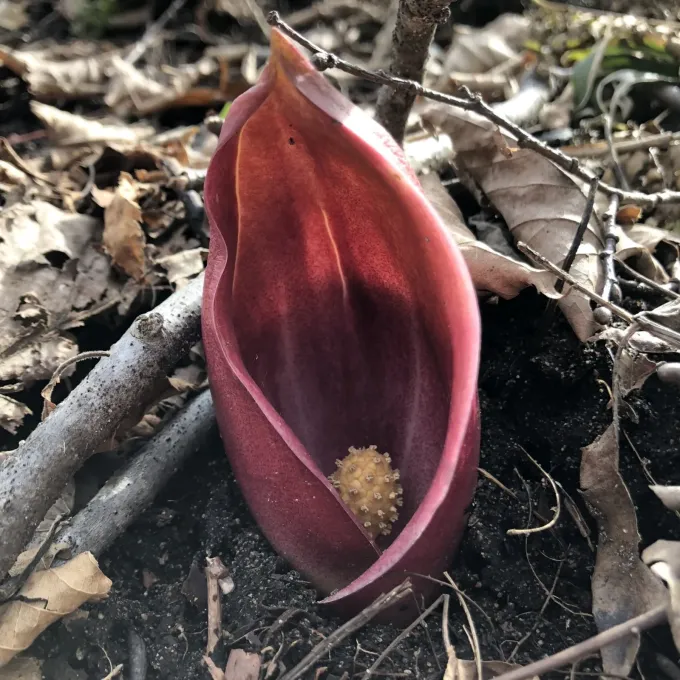
Symplocarpus renifolius is a hardy perennial belonging to the Araceae family. Propagation is primarily achieved through seed sowing or the division of established rhizomes in early spring.
Seeds require a period of cold stratification to break dormancy. Sowing should be performed in late autumn, ensuring the seeds are placed in a moist, peat-rich medium.
When propagating via division, carefully lift the rhizome mass and separate it into sections, ensuring each segment has healthy buds and a portion of the root system attached.
The plant grows slowly from seed, often taking several years to reach maturity. During this initial phase, it is crucial to protect the seedlings from desiccation.
Once established, the plants are long-lived and tend to occupy the same space for decades, as they resent being moved or disturbed.
Growing requirements
Cultivation of the Asian skunk cabbage demands specific environmental conditions mimicking its natural swampy habitats. It thrives in boggy soils or along the edges of ponds.
The soil should be acidic, nutrient-dense, and rich in organic matter. A mixture containing peat, leaf mold, and clay-rich soil is ideal for supporting its robust root system.
Regarding light, the species performs best in partial to full shade. While it can tolerate some sun if the soil remains constantly wet, intense light often leads to scorched foliage.
The plant is highly frost-tolerant and requires no winter protection in its natural range, as it is adapted to freezing climates where soil moisture prevents deep freezing of the rhizomes.
Constant moisture is the most critical factor for success. During dry spells, supplemental irrigation is necessary to ensure the root zone remains saturated throughout the growing season.
Main diseases and pests
Due to the presence of calcium oxalate crystals in its tissues, the Asian skunk cabbage is generally resistant to deer and most mammalian herbivores.
The primary threats include gastropods, such as slugs and snails, which may graze on the succulent emerging leaves during the early spring period.
Root rot caused by Oomycetes or various fungi can become an issue if the water becomes stagnant and warm during the peak of summer, lacking sufficient oxygenation.
Bacterial soft rot can occur in instances of mechanical damage to the rhizome, especially if exposed to excessive heat and contaminated water sources.
Maintaining proper spacing and ensuring the water quality around the planting site remains adequate helps mitigate the risk of pathogen buildup in the soil substrate.