
Swietenia mahagoni
Swietenia mahagoni (L.) Jacq.
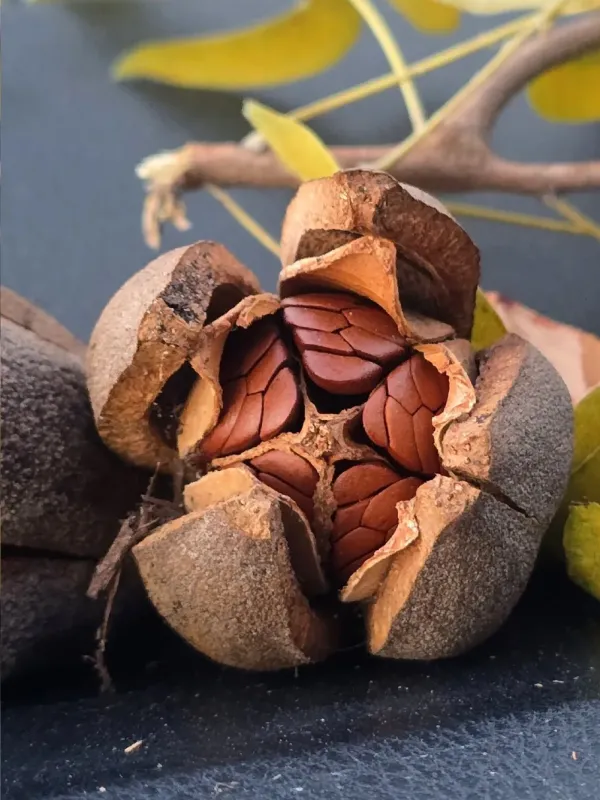
Description
Sowing dates
Swietenia mahagoni, a member of the Meliaceae family, is a slow-growing evergreen or semi-deciduous tree highly valued for its timber. The propagation of this culture is typically performed via seeds collected from mature, healthy mother trees.
Sowing is generally timed with the onset of the rainy season to ensure optimal soil moisture levels for germination. Seeds are placed in well-drained nursery beds and usually sprout within a period of two to four weeks.
Seedlings are nurtured in the nursery for approximately 6 to 12 months until they reach a robust enough state for transplanting. Successful establishment in the field requires careful spacing to avoid competition and ensure straight trunk growth.
During the first few years after planting, intensive maintenance is required. This involves regular weed control and the removal of competing vegetation, which is vital for the survival and vertical development of young mahogany plants.
Native to the Caribbean and southern Florida, the species thrives in tropical environments. When cultivated properly, it can reach significant heights, establishing a strong presence in the forest ecosystem.
Growing requirements
Mahogany trees prefer tropical climates that feature a distinct dry season, which aids in the maturation of the wood. The ideal temperature range for this species is between 22 and 30 degrees Celsius.
The selection of the site is critical; the species requires deep, fertile, and well-drained soils. It is particularly sensitive to waterlogging, so sites with high clay content or poor drainage must be avoided to prevent root diseases.
This tree is highly photophilic, meaning it requires full exposure to sunlight for vigorous growth. Providing adequate space between trees ensures that each individual receives the light necessary for developing a balanced and healthy crown.
While the tree is relatively tolerant of various soil conditions, it responds positively to balanced fertilization, particularly with phosphorus, during the early stages of its development. Maintaining a neutral to slightly alkaline soil pH is recommended.
Wind protection is essential, especially in areas prone to tropical storms. Planning the plantation layout to include natural or artificial windbreaks helps prevent mechanical damage to the trees during extreme weather events.
Yield
The primary economic output of Swietenia mahagoni is its premium-quality wood, which is known for its durability, resistance to decay, and rich, reddish-brown color. It is highly sought after for high-end furniture, cabinetry, and boat building.
The production cycle for mahogany is long, typically spanning 40 to 60 years before the trees reach harvestable timber size. This slow maturation is precisely what gives the wood its exceptional strength and density.
Yield efficiency is maximized through silvicultural management, including pruning, which encourages the development of a long, clear, and knot-free trunk. This management practice significantly increases the commercial value of the harvested logs.
In addition to timber production, the tree serves as an excellent ornamental species for landscaping and urban greening projects in tropical regions. Its ability to provide cooling shade makes it an asset to city environments.
Forestry investments in mahogany are considered long-term, yet the consistent global demand for high-quality wood ensures a strong market value, making it a staple of tropical sustainable forestry projects.
Main diseases and pests
The most significant pest affecting Swietenia mahagoni is the shoot borer, Hypsipyla grandella. The larvae of this moth tunnel into the terminal buds of young trees, causing stunted growth and trunk bifurcation.
Root rot pathogens represent a major health risk, particularly in sites that lack adequate drainage. These infections can spread rapidly, leading to the decline of entire plantation sections if not identified early.
Integrated pest management strategies are crucial, often involving a mix of biological controls and selective harvesting of infected individuals to prevent the spread of parasites and pathogens across the plantation.
Young plants may also suffer from powdery mildew in environments with high humidity and limited airflow. Maintaining proper plant spacing is a preventative measure that improves ventilation and reduces the risk of fungal outbreaks.
Protecting the plantation from grazing animals and mechanical injury is equally important, as any physical damage to the bark can serve as an entry point for diseases that can prove fatal to the tree.