
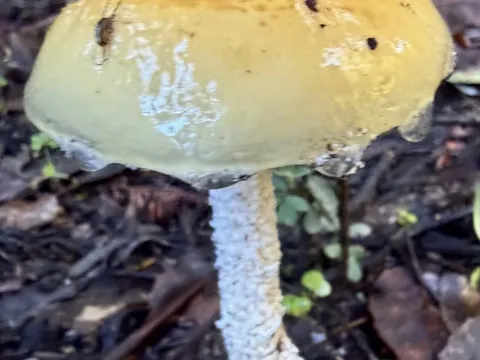
Stropharia
Stropharia
The optimal time for establishing Stropharia in open ground or greenhouses is from late spring to early summer, when the soil temperature warms up to 15–20 degrees Celsius.
What the section contains

Stropharia
Mycelium is introduced into a prepared substrate, which must be pasteurized or fermented beforehand to suppress the activity of pathogenic microorganisms.
In indoor environments, sowing times can be extended by maintaining artificial temperature control, allowing for year-round cultivation.
The sowing technology involves layering straw or wood chips, which are heavily moistened before the spawn is distributed.
After inoculation, the beds are covered with mulch or film to maintain the stable humidity required for the mycelium to penetrate the substrate.
Stropharia belongs to the Strophariaceae family and is a saprotrophic fungus that prefers cellulose-rich substrates, such as cereal straw or deciduous wood chips.
For normal mycelium development, high substrate humidity of 70–80 percent is required, and the soil must be well-aerated with a neutral pH level.
Light is not a critical factor, however, diffused light promotes the development of higher quality fruit bodies and proper pigmentation.
The temperature range for vegetative growth is 20–25 degrees, while active fruiting requires a brief drop to 12–18 degrees.
The crop is extremely sensitive to drying out of the top layer, making regular drip irrigation an essential condition for commercial production.
Average yields for Stropharia, when adhering to proper technology, range from 5 to 15 kilograms of mushrooms per square meter of productive area per season.
Production output depends directly on the quality and nutritional value of the substrate, as well as the purity of the initial mycelium.
The first wave of fruiting typically occurs 2–3 months after inoculation, with the overall production cycle lasting until late autumn.
Strategically adding nitrogen supplements to the substrate can significantly increase the weight of fruit bodies and the intensity of subsequent waves.
Under optimal growing conditions, stable yields are observed over several months, making Stropharia a profitable crop for growers.
The main threat to the crops is competitive mold fungi, such as Trichoderma, which can completely suppress Stropharia growth during the early stages.
Among pests, mushroom flies and sciarids cause the most damage, as their larvae can destroy both the mycelium and developing fruit bodies.
Slugs and snails can consume young mushrooms at night, so setting up protective barriers around the mushroom beds is a mandatory agronomic measure.
Bacterial infections that cause stem browning and rotting usually arise from water stagnation and poor ventilation in the fruiting zone.
To prevent the spread of diseases, it is essential to follow strict sanitary standards, use high-quality seed material, and keep tools clean.
Harvesting is performed when the mushroom cap is not yet fully opened and remains firm, ensuring the best commercial quality of the product.
It is recommended to gently twist the mushrooms out of the substrate to avoid damaging neighboring primordia and to prevent the rotting of stem residues.
After harvesting, it is advisable to lightly cover the hole with moist substrate to protect the mycelium from drying out and potential infections.
The harvested product must be kept in a cool place at a temperature of 2 to 4 degrees, which preserves mushroom freshness for up to 5–7 days.
Transport should be carried out in perforated containers that allow for air circulation to prevent condensation and subsequent spoilage.