
Stephanomeria exigua
Stephanomeria exigua
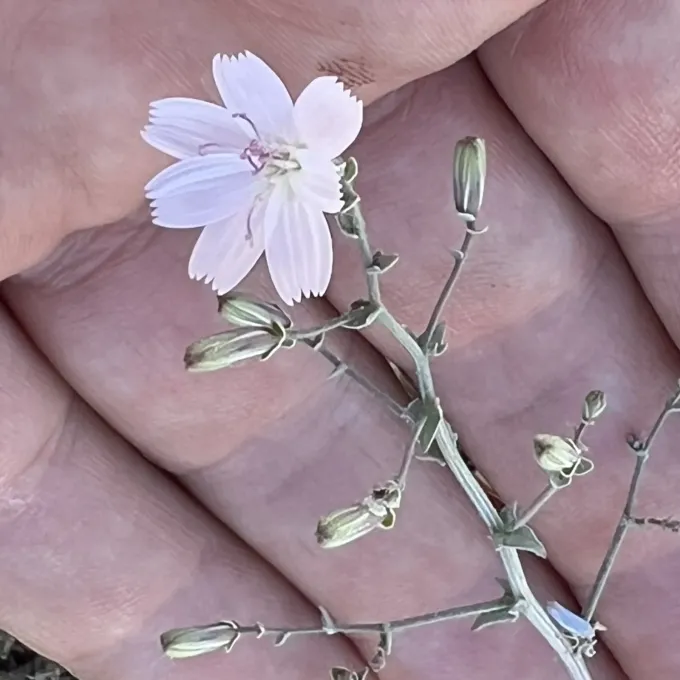
Description
Growing requirements
Stephanomeria exigua, commonly known as the small wirelettuce, is an annual herbaceous plant belonging to the Asteraceae family. It is a well-adapted species within the diverse flora of Western North America.
The plant originates from the arid and semi-arid regions of the United States and Mexico. It is frequently found in deserts, scrublands, and disturbed sandy soils where other plant life struggles to survive.
Botanically, it features a characteristic branching structure and produces small, delicate flower heads that bloom during the warmer months of the year.
Regarding soil and climate requirements, the species thrives in well-drained, nutrient-poor substrates. It has an excellent tolerance for extreme heat and prolonged dry periods, making it highly drought-resistant.
The cultivation or presence of this plant requires attention to soil aeration. It does not tolerate waterlogging, as its roots are evolutionarily adapted to porous, dry conditions typical of its native desert habitats.
Main diseases and pests
The primary threats to this species include herbivory by local insect populations, which can damage the delicate stems and reproductive organs of the plant during the early growth stage.
While adapted to harsh environments, the plant is susceptible to root rot if introduced into soil types with high moisture retention or insufficient drainage.
Competition from invasive plant species can threaten its population density, particularly in areas where natural fire cycles have been disrupted.
Fungal pathogens may occasionally occur if the plant is exposed to unusually humid microclimates, which interferes with its natural physiological balance.
Agricultural pest management often monitors the presence of aphids that may act as vectors for various plant viruses, potentially affecting neighboring agricultural crops.