
Staurogyne repens
Staurogyne repens
Description
Growing requirements
Staurogyne repens is a low-growing plant belonging to the Acanthaceae family. Native to the river banks of Brazil, it has become a staple in aquatic agriculture due to its unique growth habit and ability to form dense, lush green carpets in submerged conditions.
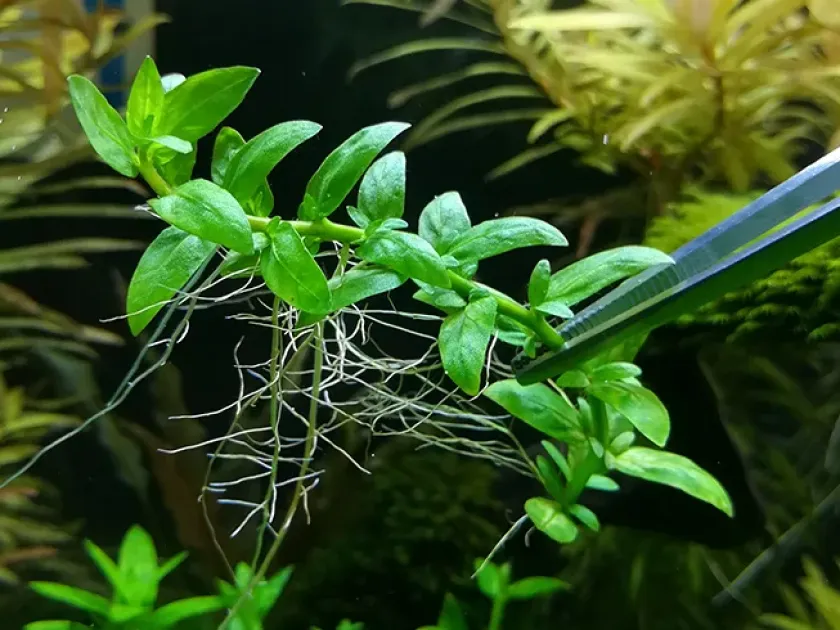
Botanically, the plant features a sturdy stem system with small, oval, light-to-dark green leaves. Unlike many other aquatic species, it is highly resilient once established and can propagate easily through cuttings and side shoots, making it a valuable crop for producers.
The culture requires high-intensity lighting to maintain its compact, creeping shape. In low-light environments, the plant tends to stretch vertically, which is considered a deviation from the desired agricultural quality standard for carpet-forming species.
Soil requirements involve a nutrient-rich, fine-grained substrate that supports robust root development. It thrives in slightly acidic to neutral water conditions with a temperature range between 22 and 28 degrees Celsius, which mimics its tropical habitat.
Agrotechnical maintenance includes regular CO2 supplementation and the application of liquid fertilizers containing trace minerals like iron. Frequent trimming of the lateral branches is essential to encourage horizontal growth and to maintain the density of the carpet layer.
Main diseases and pests
Algae infestations represent the primary threat to Staurogyne repens yields. Rapid algae growth can outcompete the crop for nutrients, blocking light and stifling the plant's physiological development, often requiring physical removal and nutrient control.
Nutrient deficiency, specifically of potassium and iron, leads to visible chlorosis. If the leaves start showing yellowish spots or holes, it is an immediate indication that the fertilization regime must be adjusted to ensure the plants regain their health and vitality.
Pests, such as various aquatic snails, can consume the leaves, causing significant cosmetic damage and potentially weakening the plant structure. Integrated pest management techniques should be employed to control these populations without harming the aquatic environment.
Fungal infections can occur if the water circulation is insufficient or if the temperature exceeds the plant's tolerance limits. Poor ventilation or water stagnation can lead to rot at the base of the stems, especially in high-density planting conditions.
Mechanical damage during harvesting or trimming can leave the plant susceptible to opportunistic pathogens. Proper hygiene protocols, including the sterilization of tools and equipment, are strictly recommended to prevent the spread of diseases within the cultivation area.