
Chrysophyllum cainito
Chrysophyllum cainito L.
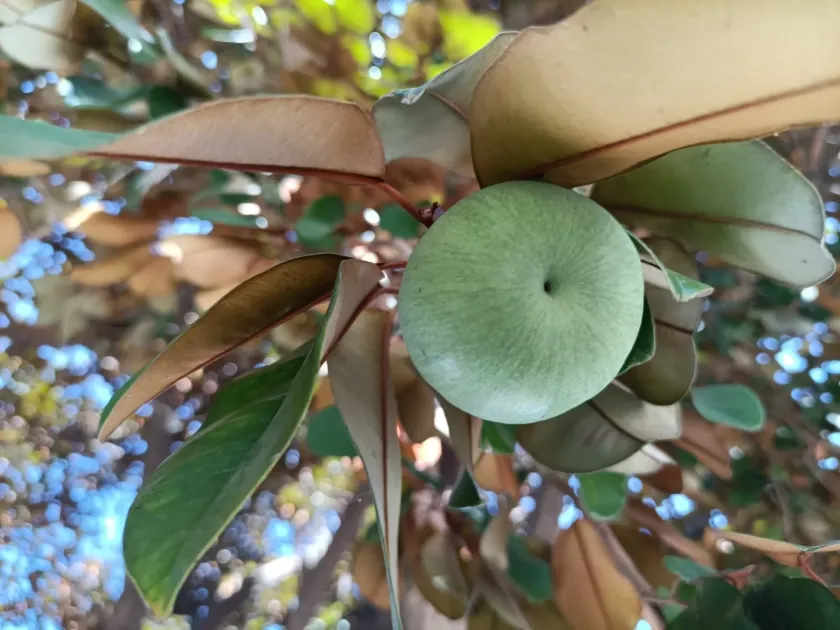
Description
Growing requirements
Chrysophyllum cainito, commonly known as the star apple, is a tropical tree belonging to the Sapotaceae family. It is native to the Greater Antilles and the West Indies but is now widely cultivated across various tropical regions.
The tree is prized for its dense, glossy foliage, which features a striking golden-brown underside. This contrast makes it a popular choice for both commercial orchards and ornamental gardening in frost-free regions.
The species thrives in warm, humid climates and is intolerant of frost or extreme cold. It performs best in deep, fertile soils with excellent drainage, as the roots are highly susceptible to rot under waterlogged conditions.
Agronomic management involves providing supplemental irrigation during prolonged dry spells and implementing a regular fertilization program. Nitrogen-rich fertilizers promote vegetative growth in young trees, while balanced nutrients support fruit set.
Pruning is essential to maintain the structural integrity of the tree and to improve light penetration into the canopy. This practice not only enhances fruit quality but also reduces the incidence of moisture-related fungal diseases.
Yield
Productivity is significant for mature trees, which can yield over 100 kilograms of fruit per season. Commercially, grafting is the preferred propagation method to ensure consistent fruit size and quality compared to seedling trees.
Main diseases and pests
Common pests include scale insects and mealybugs, which settle on the leaves and stems. Integrated pest management strategies, such as using biological controls or targeted insecticidal soaps, are effective for maintaining plant health.
Fungal pathogens can occasionally affect the root system if soil conditions are poor. Ensuring a proper spacing between trees is critical to facilitate airflow and keep humidity levels within a range that limits pathogen development.
Harvesting
Harvesting involves manual picking once the skin reaches its characteristic mature color. The fruit is technically a berry, and its name comes from the star-shaped pattern visible when it is cut horizontally.
Post-harvest handling must be delicate due to the fruit's thin skin. Star apples have a relatively short shelf life, making them best suited for fresh local market consumption rather than long-distance export.