
Sprekelia formosissima
Sprekelia formosissima (L.) Herb.
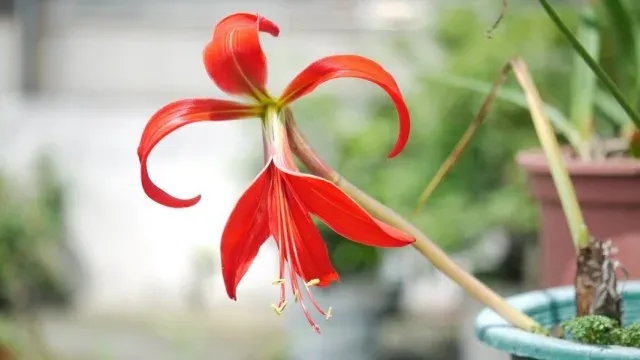
Description
Sowing dates
Sprekelia formosissima bulbs should be planted in the spring once the threat of frost has passed and the soil has sufficiently warmed up.
For container-grown plants, the planting season can begin in late February to ensure early flowering indoors or in greenhouses.
When planting, it is essential to leave the top third of the bulb exposed above the soil surface to prevent the rot of the neck and crown.
Propagation by seeds is possible but requires sowing immediately after maturation in a well-draining, moist seed-starting mix under cover.
Seedlings need to be transplanted into individual pots after their first true leaves emerge, and they usually take at least three years to reach blooming size.
Growing requirements
Belonging to the Amaryllidaceae family, this plant is native to Mexico and thrives in environments with high light intensity and warm temperatures.
The preferred soil type is a loose, fertile, and free-draining medium, as the plant is highly sensitive to waterlogged conditions that cause bulb rot.
During the active growing season, consistent watering is required, while a distinct dry dormant period in a cool room is necessary for successful blooming.
Regular fertilization with a balanced liquid fertilizer every two weeks during the growth phase supports the development of the iconic orchid-like flowers.
The plant performs best when kept in a location with partial to full sun and adequate air circulation to prevent overheating of the foliage.
Main diseases and pests
Fusarium wilt and bulb rot are the most common diseases, usually caused by overwatering or poor drainage systems in the potting medium.
Pests such as mealybugs and scale insects frequently attack the leaves, requiring constant vigilance and early intervention with systemic treatments.
Spider mites can become a major concern if the plant is kept in an environment with very low humidity, particularly during the dormant indoor storage phase.
Treatment involves cleaning affected parts with horticultural oils or applying appropriate insecticides to stop the spread of the infestation.
- Maintain proper drainage in every container.
- Isolate new plants to check for potential pests.
- Provide cool temperatures during the winter dormant phase.