
Spirodela punctata
Spirodela punctata
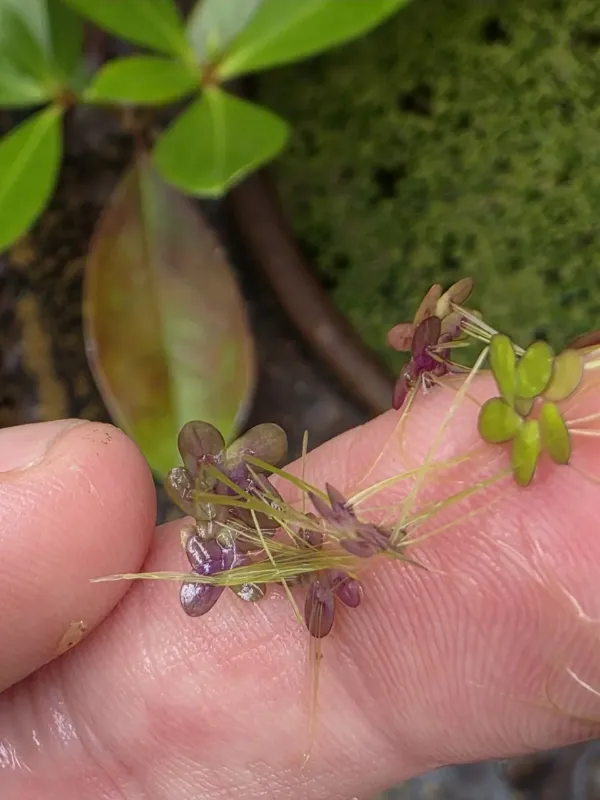
Description
Sowing dates
Spirodela punctata is a thermophilic crop, meaning its rapid propagation in open water bodies starts when water temperatures consistently exceed 15–20 degrees Celsius.
The optimal time for introducing the culture into production ponds is from late spring to early summer, once the risk of spring frosts has completely passed.
In closed-loop systems, such as vertical farms or aquaponic modules, the culture can be introduced year-round, provided that temperature and light requirements are strictly met.
Propagation occurs vegetatively via daughter fronds, allowing the colony to quickly colonize the entire water surface if environmental conditions are favorable.
Initial stocking density should target 10–15% coverage of the water surface, ensuring the plant has enough space to acclimate and expand rapidly.
Growing requirements
This species belongs to the Araceae family, subfamily Lemnoideae, and is characterized as a tiny floating aquatic plant with well-developed roots hanging into the water column.
The crop requires a water environment rich in nitrogen and phosphorus, making it an excellent candidate for wastewater treatment and nutrient recovery from farm effluents.
Optimal pH levels for active growth range from 6.5 to 7.5, and the plant is sensitive to high concentrations of heavy metals which can inhibit its development.
Spirodela thrives best in stagnant or slow-moving water, as turbulent currents prevent the formation of a compact mat and may reduce biomass productivity.
Light requirements are high, as photosynthesis is the primary engine for the rapid cell division that leads to the plant's massive reproductive output.
Yield
The yield of this culture is remarkably high; under ideal conditions, the population area can double in as little as 2 to 4 days of active growth.
Biomass productivity can be significant, allowing for frequent daily or bi-weekly harvests during the peak of the growing season.
Yield is directly proportional to nutrient availability, meaning that supplementation with organic fertilizers can significantly increase the total dry matter output.
In terms of dry weight, the yield is approximately 5–8% of the total fresh weight, which is quite high for aquatic plant production systems.
Regular thinning of the colony is essential to maintain growth rates, as overcrowding restricts light penetration to lower layers and causes senescence.
Main diseases and pests
Primary biological threats include various fungal pathogens that can develop under conditions of poor air circulation or stagnant water surface states.
Insects, such as certain mosquito larvae or aquatic beetles, may cause minor damage to the fronds, though the economic impact is generally negligible.
Ecological competition from other duckweed species (e.g., Lemna minor) can occur, where rival species might outcompete Spirodela if conditions deviate from its preference.
Sudden drops in water temperature represent a significant environmental stressor, potentially leading to chlorosis and the sudden collapse of the floating colony.
Excessive accumulation of hydrogen sulfide in the pond bottom can lead to root system decay and a total loss of viability in the population.
Harvesting
Harvesting is typically performed using fine-mesh nets or automated conveyor systems that skim the top layer of plant biomass from the water surface.
The harvested material must be thoroughly rinsed to remove silt and debris, which are critical steps for maintaining the quality of the final feed product.
Processing for feed usually involves mechanical pressing to remove excess water, followed by low-temperature drying to preserve heat-sensitive nutrients.
Fresh biomass can be fed directly to livestock, particularly poultry, waterfowl, and swine, as it is highly digestible and nutrient-dense.
For long-term storage, the harvest can be ensiled, a process that preserves the plant's high vitamin and protein content for use during off-season periods.