
Spilanthes leiocarpa
Spilanthes leiocarpa
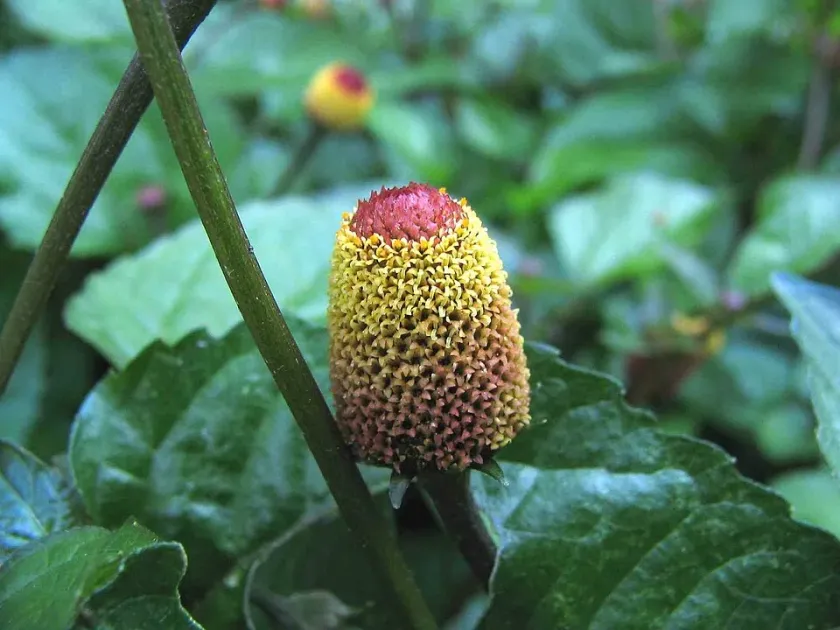
Description
Sowing dates
Spilanthes leiocarpa is a heat-loving plant, so in temperate climates, it is grown mainly through seedlings. Seeds are sown indoors in March or early April, ensuring a stable soil temperature of approximately 20–22 degrees Celsius.
Seedlings should be transplanted outdoors only after the risk of night frosts has passed and the soil has warmed up to at least 15 degrees Celsius. The optimal time for transplanting is usually in May, allowing the plant to gain sufficient biomass before the summer heat.
The planting pattern involves spacing plants 30–40 cm apart. This interval is necessary for forming a bushy habit and ensuring proper air circulation between plants, which is critical for preventing fungal diseases.
If direct seeding is practiced in tropical climates, the seeds should be sown at a shallow depth of 0.5–1 cm. Spilanthes seeds require high substrate moisture during the germination stage, which typically takes 7 to 14 days.
Crop rotation for this species involves planting after cover crops or vegetables that do not belong to the Asteraceae family to reduce the risk of soil-borne pathogens accumulation.
Growing requirements
Spilanthes leiocarpa belongs to the Asteraceae family. It is a perennial herbaceous plant, which is often grown as an annual crop in industrial settings due to its sensitivity to low temperatures.
The plant prefers sunny, sheltered locations. For successful development, it requires fertile, well-drained soil with a neutral to slightly acidic pH, enriched with organic matter.
The culture is highly demanding of regular moisture. During the active growth phase, the soil must remain moderately moist, but waterlogging in the root zone is unacceptable as it quickly leads to root rot and plant death.
The optimal temperature range for vegetation is between 20 and 30 degrees Celsius. When temperatures drop below 10 degrees, plant growth virtually stops, and frost will inevitably kill the aerial parts of the plant.
To improve productivity, it is recommended to apply complex mineral fertilizers during the active budding phase. Nitrogen fertilizers are effective during the initial growth stage, while potassium and phosphorus support flowering.
Yield
The economic value of Spilanthes leiocarpa is centered on its biomass, specifically the leaves and flower heads, which contain spilanthol, known for its analgesic effects.
Maximum yield is achieved through regular pruning of flower shoots. This stimulates the plant to form new lateral branches, which significantly increases the total output of marketable produce over the season.
Average yield of raw mass varies depending on planting density and agricultural practices. With intensive cultivation, several kilograms of high-quality plant material can be harvested per square meter.
Flower heads are the most valuable part, as they concentrate the highest amount of secondary metabolites. The drying process must occur in the shade with good ventilation to preserve all active compounds.
In industrial production, yield also depends on the quality of seed stock and the correct choice of hybrids adapted to the specific day length of the cultivation region.
Main diseases and pests
Spilanthes leiocarpa can be affected by common vegetable pests, such as aphids and spider mites, which are particularly dangerous in greenhouse conditions with low air humidity.
Fungal rots are the most common diseases, occurring due to waterlogged soil and poor air circulation. Gray mold and root rots can attack the plant if the temperature regime is violated or if irrigation is excessive.
Disease prevention includes strict adherence to irrigation schedules and the removal of weeds, which often serve as reservoirs for infections and pests. Ensuring proper spacing during planting is vital.
When pests are detected, the use of biological control agents is recommended, as the use of harsh chemicals is undesirable for a plant often used in medicinal or food processing industries.
Nematodes can also pose a threat if the crop is grown in the same location for multiple years, making crop rotation an essential management strategy.
Harvesting
Harvesting of Spilanthes flower heads begins during the full bloom phase when the concentration of active substances is at its peak. Depending on the climate, this process can last from mid-summer until late autumn.
Harvesting is performed in dry weather after the dew has evaporated. Using shears or sharp garden scissors allows for the careful removal of flower heads with short stalks without damaging the central stem of the plant.
After harvest, the raw material must be sent for drying or processing immediately. The optimal temperature for drying is 35–40 degrees Celsius, which avoids the evaporation of essential oils and the loss of active components.
If seed collection is planned, several of the most developed plants should be left until the flower heads are fully mature, becoming dark and dense, indicating the end of the vegetative cycle.
Dried raw material should be stored in airtight containers in a cool, dark, and dry place to prevent the loss of therapeutic properties and damage from moisture or storage pests.