
Sphenostylis stenocarpa
Sphenostylis stenocarpa
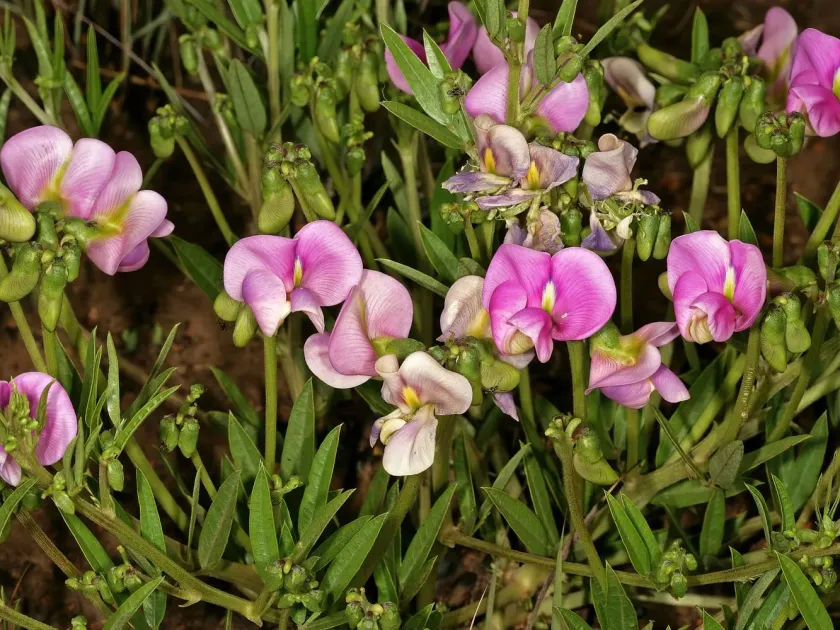
Description
Sowing dates
Sphenostylis stenocarpa, commonly known as the African yam bean, is a leguminous plant cultivated primarily for its seeds and edible tubers. It is a vital crop in tropical regions due to its resilience and high protein content.
Sowing should take place at the start of the rainy season when soil temperatures are consistently above 20°C. Seeds should be planted at a depth of 3 to 5 cm to ensure good contact with moisture.
A plant spacing of about 60 cm between rows is recommended to allow for adequate growth and canopy development. Because the plant is a climber, providing stakes or support structures can significantly improve crop health.
Pre-soaking seeds for 12 to 24 hours prior to planting can help increase germination rates, especially in drier environments. The plants take time to establish, so early weed control is critical for success.
The plant thrives in mixed cropping systems, often grown alongside cereals like maize or sorghum, which provide natural support for the climbing vines.
Growing requirements
This crop prefers well-drained sandy loam or loamy soils. While it can survive on poor, acidic soils, the best yields are obtained in fertile, neutral soil conditions with plenty of organic matter.
Sphenostylis stenocarpa is relatively drought-tolerant once fully established, but it requires consistent moisture during the flowering and pod-filling stages to ensure optimal seed development.
The ideal temperature range for growth is between 22°C and 30°C. It is a strictly tropical plant that does not tolerate frost or waterlogged conditions, which can lead to rapid root decay.
Exposure to full sunlight is essential. Shaded areas will significantly reduce the number of flowers produced, thereby negatively impacting the overall yield of both pods and tubers.
Regular maintenance, including keeping the soil aerated through light hoeing, helps the plant build its root system and improves the structural development of the edible tubers.
Yield
The crop offers a dual harvest: high-protein seeds and energy-rich tubers. Yields can vary based on soil quality, but well-managed farms typically see significant output per hectare.
Seed yields often range between 1 and 2 tons per hectare under ideal environmental conditions. The size and quantity of tubers depend heavily on the maturity duration of the chosen variety.
Harvesting is often staggered, as the pods do not all mature at the same time. This allows for a continuous supply of fresh legumes throughout the later part of the growing season.
To maximize tuber growth, some farmers remove flowers during the early blooming period, although this is a trade-off that decreases the final seed yield of the plant.
Adequate weed management and early pest intervention are the most critical factors in achieving consistent, high-quality yields in commercial production settings.
Main diseases and pests
Bruchids and other seed-boring beetles are the primary pests of stored seeds. Proper drying and the use of airtight storage containers are essential to prevent infestation.
Aphids and leaf-sucking insects can cause stunted growth and transmit viral diseases. Monitoring leaf surfaces regularly is necessary to prevent small populations from becoming large outbreaks.
Fungal diseases like leaf spot and root rot are prevalent in overly humid or poorly drained fields. Crop rotation is the most effective way to manage soil-borne pathogens.
Nematodes can infest the tubers, leading to deformities and reduced market value. Rotating with non-host crops like grasses or cereals is recommended every two years.
Mildew may occur during periods of prolonged high humidity. Improving air circulation by keeping rows clean and properly spaced helps mitigate the spread of these fungi.
Harvesting
The harvest begins when pods change color from green to brown and show signs of drying. Seeds should be shelled immediately after harvest to maintain their quality and prevent spoilage.
Tubers are harvested at the end of the vegetative cycle, once the vines have withered. The soil should be loosened carefully to avoid bruising the tubers during excavation.
Cleaned tubers should be dried in a shaded, well-ventilated area before being stored. This process hardens the skin, which significantly extends their shelf life.
Seeds need to be thoroughly dried until their moisture content is low enough to prevent mold during storage. Using traditional sun-drying methods is usually sufficient for small-scale farmers.
Byproducts of the harvest, including dry vines and husks, can be returned to the soil as green manure, adding nitrogen back to the field for future cultivation cycles.