
Sphenostylis angustifolia
Sphenostylis angustifolia
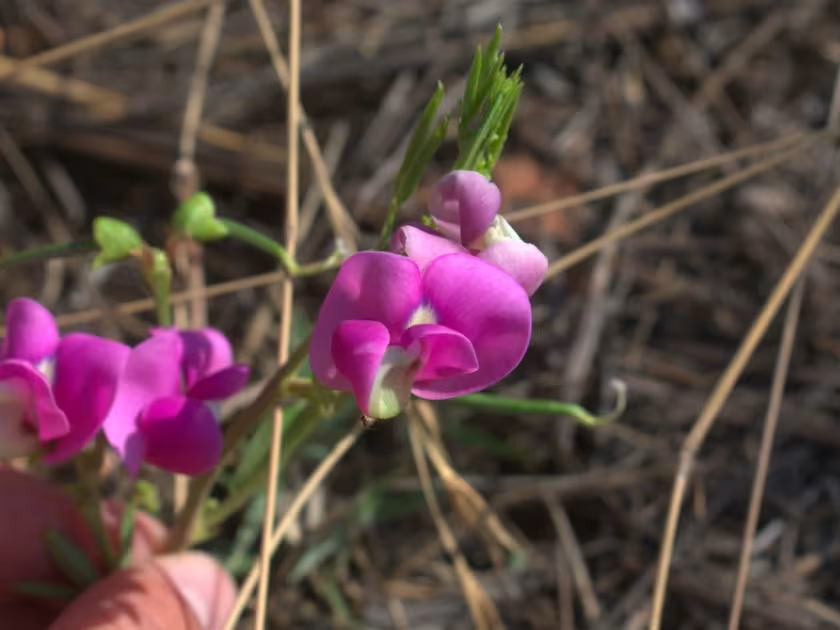
Description
Sowing dates
Sowing of Sphenostylis angustifolia is typically performed at the onset of the rainy season to ensure optimal soil moisture for seed germination. The best soil temperature for planting ranges from 20 to 25 degrees Celsius.
Seeds should be sown at a depth of 3 to 5 centimeters, depending on soil texture. Ensuring good seed-to-soil contact is essential to facilitate rapid hydration and the emergence of healthy seedlings.
Row spacing of 45 to 60 centimeters is recommended for field cultivation, which allows for mechanical weeding and proper air circulation around the plants. Proper spacing is crucial to prevent competition for light and nutrients.
The application of specific nitrogen-fixing bacterial inoculants before sowing is highly beneficial for the crop's development. This practice improves the plant's ability to assimilate atmospheric nitrogen, especially in less fertile soils.
Preparing a clean, fine seedbed is a recommended practice to eliminate weed competition during the early, vulnerable stages of plant growth.
Growing requirements
Sphenostylis angustifolia is a legume species from the Fabaceae family, recognized for its ability to develop storage tubers. It is a perennial plant that thrives in various environments, exhibiting significant adaptability.
The plant requires full sun exposure throughout its vegetative period for optimal photosynthesis and tuber development. Excessive shade significantly stunts growth and reduces overall biomass production.
It prefers well-drained, sandy or loamy soils where water does not accumulate. Proper drainage is vital for root health, as oxygen deprivation due to waterlogging can lead to root decay.
An optimal soil pH for this crop is between 5.5 and 7.0, which supports the symbiotic activity of nitrogen-fixing bacteria. Soil liming is recommended for acidic soils to enhance nutrient availability.
Fertilization with phosphorus and potassium is advised to promote vigorous root development and support the accumulation of starches and proteins within the plant's storage organs.
Yield
The productivity of Sphenostylis angustifolia is measured by the yield of both its vegetative biomass and its edible tubers. It is often valued for its resilience and reliable performance in challenging agricultural settings.
The tubers, which act as energy storage, are a rich source of nutrients. Depending on environmental conditions and crop management, tuber mass can be significantly increased through proper irrigation and soil aeration.
The vegetative part of the plant serves as a high-quality forage source for livestock. Its nutritional value makes it a useful asset in integrated crop-livestock farming systems.
Consistent field maintenance, including inter-row cultivation, helps to maximize yields. Healthy plants respond well to proper care by increasing the volume and quality of their tubers.
Harvesting is typically timed for the period when the above-ground biomass begins to senesce naturally, which indicates that the plant has completed its cycle and stored nutrients in the tubers.
Main diseases and pests
Root rot is one of the most common threats to this crop, particularly in poorly drained or waterlogged soils. Early detection and soil management are key to preventing large-scale crop failure.
Pests such as aphids can damage young shoots and act as vectors for various viral diseases. Integrated pest management strategies, including the use of targeted insecticides, can help protect the crop.
Soil-dwelling larvae may cause physical damage to the tubers, which compromises their storage life and quality. Crop rotation is an essential practice to reduce the pressure from these soil-borne pests.
Viral infections, characterized by leaf mosaic and stunting, can lead to significant yield losses. Controlling weed reservoirs and insect vectors is critical for managing the spread of these viruses.
Applying preventative measures, such as selecting resistant cultivars and treating seeds with broad-spectrum fungicides, remains the cornerstone of effective crop protection.