
Spatholobus ridleyi
Spatholobus ridleyi
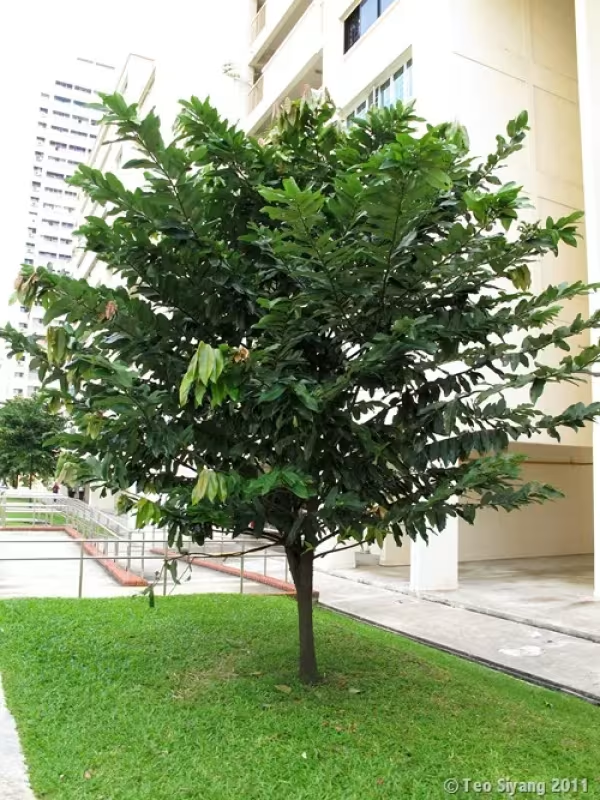
Description
Growing requirements
Spatholobus ridleyi is a woody liana species belonging to the legume family (Fabaceae). Originating from the tropical rainforests of Southeast Asia, it is well-adapted to the high-humidity and high-temperature conditions characteristic of its native habitat.
To cultivate this species successfully, one must replicate the tropical forest environment. The plant thrives in well-draining, nutrient-rich soils that are consistently moist but never waterlogged. Temperature stability is paramount, as the plant does not tolerate sudden cold snaps or frost.
As a climbing vine, Spatholobus ridleyi requires structural support to reach its full growth potential. Without adequate trellising or natural forest support, the plant's development is significantly inhibited, preventing it from reaching its maturation phase.
The agronomic management of this crop involves maintaining high levels of organic matter in the soil and ensuring a regular irrigation schedule. Mulching is highly recommended to preserve soil moisture and regulate temperature around the root zone.
Industrially and traditionally, the plant is valued for its secondary metabolites, particularly in its stems. These compounds are studied for their potential in pharmacological applications, contributing to the plant's status as a specialized crop in certain botanical regions.
Main diseases and pests
The most significant threat to Spatholobus ridleyi is root rot caused by stagnant water in the soil. Proper site selection and drainage management are the primary defenses against these soil-borne pathogens.
Insect pests, including aphids and whiteflies, can become an issue, particularly in monoculture settings or nursery conditions. Integrated pest management (IPM) strategies, including biological controls, are effective for long-term health maintenance.
Fungal leaf spots can occur when air circulation is poor, emphasizing the need for proper pruning and spacing. Pruning should always be performed with sanitized tools to prevent the introduction of pathogens into the vascular system.
Nutrient deficiency, particularly during the rapid growth phase, can render the vines susceptible to secondary infections. A balanced fertilization program is essential to maintain the crop's vigor throughout the growing season.
Environmental degradation and habitat loss in native tropical zones pose a critical threat to the survival of this species. Controlled cultivation is essential to maintain the supply of this botanical resource while ensuring the sustainability of the population.