
Spathiphyllum wallisii
Spathiphyllum wallisii Regel
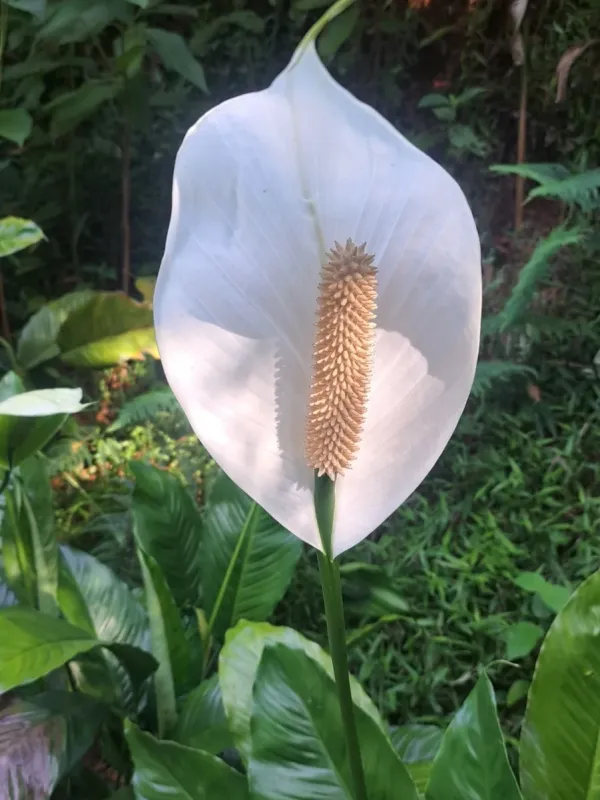
Description
Growing requirements
Spathiphyllum wallisii is a perennial herbaceous plant belonging to the Araceae family. Originating from the tropical rainforests of Colombia and Venezuela, this species has become a widely cultivated ornamental crop valued for its year-round foliage and distinctive floral structures.
Botanically, the plant features large, elliptical, dark green leaves growing directly from the rhizome. The inflorescence consists of a spadix covered by a white spathe, which serves as a protective bract. The plant typically reaches a height of 30 to 50 centimeters.
To ensure optimal growth, the crop requires consistent tropical conditions, ideally between 18°C and 25°C. It is highly sensitive to direct sunlight, which can cause leaf scorch, and prefers bright, indirect light conditions mimicking the rainforest canopy.
The growing medium must be highly porous and moisture-retentive but well-drained. A mixture consisting of peat moss, pine bark, perlite, and a small amount of charcoal is recommended to prevent soil compaction and facilitate adequate oxygen exchange to the roots.
Irrigation management is critical. The substrate should be kept consistently moist but not waterlogged. Allowing the surface layer of the soil to dry slightly between waterings prevents the onset of anaerobic conditions that favor root decay.
Main diseases and pests
The primary pests affecting Spathiphyllum wallisii include spider mites, mealybugs, and scale insects. These organisms thrive in environments with low humidity, making regular misting and foliage inspection essential for early detection and prevention.
Fungal diseases, specifically root rot caused by Phytophthora or Pythium species, are common threats when plants are overwatered or grown in heavy, non-aerated soil. Symptoms include wilting despite moist soil and the development of black lesions on the petioles.
In addition to pathogens, physiological disorders such as leaf tip necrosis often occur due to fluoride toxicity or salt accumulation from fertilizers. Using distilled or rain water can significantly mitigate these abiotic stress symptoms.
Integrated Pest Management (IPM) strategies are recommended for commercial growers. This includes using biological controls like predatory mites for spider mite infestations and applying systemic fungicides only when environmental controls prove insufficient.
Proper nutritional management is vital for plant vigor. Utilizing balanced, water-soluble fertilizers with micronutrients during the growing season helps the plant resist disease pressure and promotes more frequent and robust spathe production.