
Sincoraea burle-marxii
Sincoraea burle-marxii
Description
Growing requirements
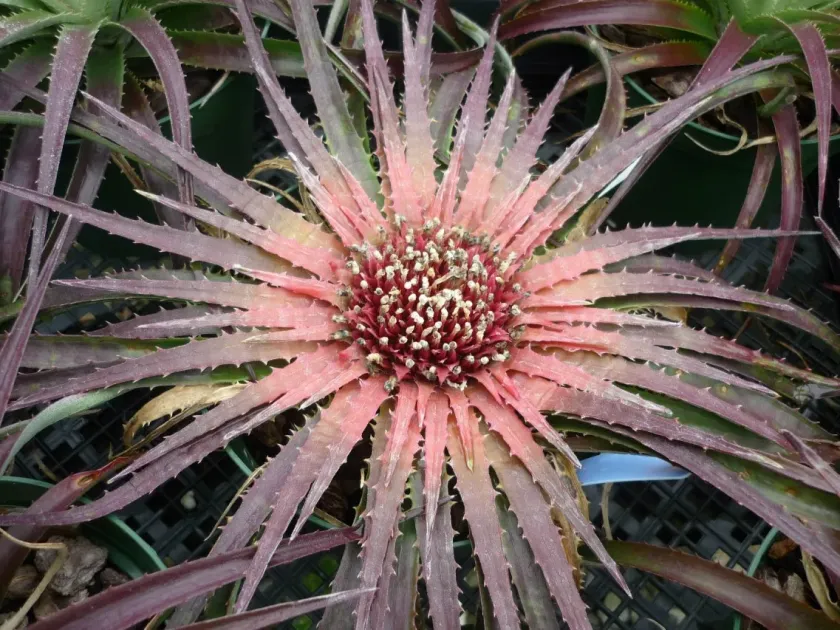
Sincoraea burle-marxii is a striking perennial herb belonging to the Bromeliaceae family. Native to the rocky outcrops of Bahia, Brazil, this species has adapted to survive in challenging, nutrient-poor conditions on stony slopes.
The plant features a basal rosette of rigid, coriaceous leaves that often develop deep purple or reddish hues under optimal light conditions. The central inflorescence is a dense, colourful spike that provides high ornamental value for several months.
Cultivation requires bright, indirect light to maintain the plant's structural integrity and leaf coloration. Direct afternoon sunlight is typically avoided, as it can cause desiccation and scorch the tough, succulent leaves.
The growing medium must be highly porous and well-draining, mimicking the rocky substrate of its natural habitat. A mixture of orchid bark, perlite, and coarse sand is ideal to ensure that the roots do not sit in stagnant water.
Climatic requirements involve moderate temperatures, ideally between 22°C and 28°C during the active growth period. Providing good air circulation is essential to prevent moisture accumulation in the leaf axils, which could lead to physiological stress.
Main diseases and pests
The most significant threat to Sincoraea burle-marxii is overwatering, which causes rapid decay of the root system. Proper drainage is the primary defense against rot caused by fungal pathogens in the soil.
Common pests include scale insects and mealybugs, which tend to hide in the tight spaces between leaves. Their presence can severely weaken the plant by feeding on its sap and creating wounds that serve as entry points for secondary infections.
Effective pest management involves mechanical removal of visible insects followed by the application of mild, systemic insecticides. Monitoring the plant regularly, especially the inner parts of the rosette, is crucial for early detection.
Inadequate ventilation combined with high humidity often leads to the development of fungal leaf spots. Such conditions should be mitigated by increasing airflow and reducing the frequency of watering during cooler or overcast days.
Overall, maintaining the plant in a dry-preferred state with occasional thorough irrigation helps to boost its natural resistance against most common agricultural pests and diseases.