
Sincoraea amoena
Sincoraea amoena
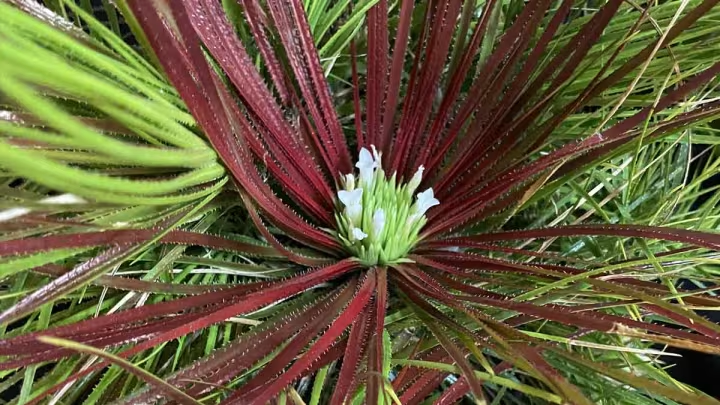
Description
Growing requirements
Sincoraea amoena is a remarkable species belonging to the Bromeliaceae family. Native to the rocky outcrops of the Bahia and Minas Gerais regions in Brazil, this plant has adapted to survive in environments where water availability is periodic and soil depth is minimal.
To successfully cultivate Sincoraea amoena, one must provide a substrate that mimics its natural rupicolous habitat. A mix of orchid bark, perlite, and coarse peat is recommended to ensure rapid drainage and prevent the roots from remaining in a saturated state for extended periods.
Light requirements are significant; the plant thrives under bright, filtered light. While it is tolerant of some direct morning sun, intense afternoon exposure can damage the foliage. Proper light levels are essential to maintain the vibrant coloration of the leaves and the structural integrity of the rosette.
Temperature management should focus on maintaining a moderate range between 20°C and 27°C. During the cooler winter months, the plant benefits from a slight reduction in temperature, which helps to trigger or regulate its growth cycles and prepares it for the subsequent blooming phase.
Watering should be approached with caution. It is best to water the potting mix thoroughly and allow it to dry significantly before the next irrigation. Maintaining a clean environment and ensuring that the water used is free from high concentrations of salts is beneficial for long-term health.
Main diseases and pests
The primary threats to the health of Sincoraea amoena are fungal infections, particularly those affecting the roots and the base of the rosette. Overwatering or poor drainage often leads to these conditions, which can be fatal if not addressed early.
Pests such as mealybugs represent a common challenge for growers. These insects often cluster in the tight spaces between leaves, making them difficult to spot. Their feeding habits cause stunted growth and can lead to secondary infections.
Scale insects are another potential issue that can infest the foliage, leaving behind unsightly spots and weakening the plant. Regular leaf cleaning and inspection can significantly reduce the risk of a severe infestation.
Spider mites can become problematic in environments with low humidity. Their presence is usually indicated by a fine webbing and stippling on the leaves, which requires immediate attention with appropriate acaricides or increased moisture levels.
Successful management relies on preventive care. Ensuring good air circulation and inspecting new additions to your collection are the most effective ways to mitigate the risk of disease and pest outbreaks in your garden.