
Simsia foetida
Simsia foetida
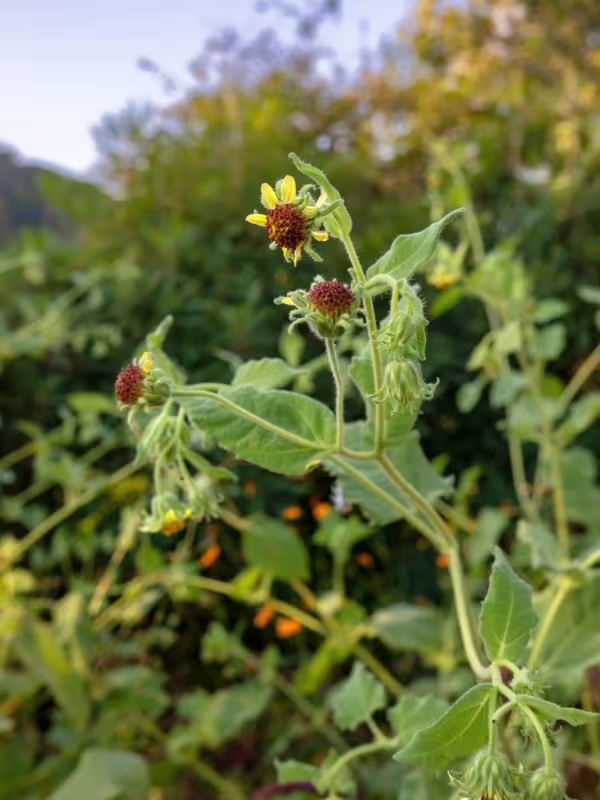
Description
Sowing dates
Simsia foetida belongs to the Asteraceae family. This annual herbaceous plant is native to the Americas, where it has historically adapted to diverse climates ranging from arid to temperate zones.
The sowing process begins when soil temperatures consistently reach levels suitable for germination, typically in late spring once the risk of ground frost has completely subsided.
Preparation involves creating a fine tilth, which is crucial for uniform seed distribution and ensuring optimal contact between the seed and soil particles for efficient water uptake.
Seeds should be sown at a shallow depth of approximately 2-3 centimeters. This depth promotes rapid emergence, allowing the crop to establish itself quickly before facing competition from opportunistic weeds.
Planting density is adjusted based on the end-use, with higher densities typically utilized for maximizing green biomass output, while lower densities are preferred for seed production.
Growing requirements
This crop thrives in well-drained, fertile soils ranging from loamy to sandy textures. It exhibits a high degree of adaptability but performs best when soil pH is maintained near neutral levels.
Simsia foetida is a light-demanding crop. It requires extensive sunlight exposure throughout its developmental stages to support robust growth and to reach full maturity during the growing season.
Water availability is essential for maintaining growth rates. Although the plant is somewhat drought-tolerant, supplemental irrigation during dry spells ensures higher quality biomass and prevents premature plant hardening.
Optimal growth occurs in warm climates, as the plant is sensitive to prolonged cold periods which can stunt growth and delay the transition through developmental phenological stages.
Nutrient management is key to productivity. Applications of balanced fertilizers, particularly those supplying nitrogen for vegetative growth and phosphorus for root and flower development, are highly recommended.
Yield
The primary agricultural interest in Simsia foetida lies in its biomass potential. It serves as a source of plant material that can be integrated into livestock forage programs after proper processing.
Yield metrics are largely determined by site-specific factors such as water availability, soil quality, and the strategic timing of agronomic interventions during the most active growth phases.
The plant has shown promising regrowth capabilities after harvesting, potentially allowing for multiple cuts in a single season under ideal climatic conditions and intensive management practices.
The unique chemical profile of the plant, including aromatic compounds, necessitates careful management when introducing it into animal diets to ensure palatability and nutritional safety.
Ongoing agricultural research continues to explore the genetic potential of the species for improved forage quality and increased biomass yields in varying environmental contexts.
Main diseases and pests
Common phytosanitary issues affecting Simsia foetida include fungal infections, such as powdery mildew and various leaf spot diseases, which often appear during periods of high humidity.
Insect pests, primarily aphids and several types of leaf-chewing beetles, pose a threat to the plant's photosynthetic capacity by damaging the foliage during the peak growing season.
Effective management strategies rely on crop rotation and the maintenance of field hygiene to prevent the buildup of soil-borne pathogens and the proliferation of harmful insect populations.
Integrated Pest Management (IPM) practices are encouraged, utilizing biological controls and selective treatments to minimize the impact on the environment while safeguarding crop health.
Regular field scouting is essential for the early detection of stress factors, enabling timely responses that protect the crop's productive potential throughout its life cycle.
Harvesting
Harvesting for green biomass is most effective during the early flowering stage, as this ensures a balance between total biomass volume and the concentration of digestible nutrients.
Modern forage harvesting equipment, such as forage harvesters, is recommended to ensure consistent cutting heights and efficient transition of the cut material for further use or preservation.
Seed harvesting requires careful monitoring of the capitula maturation. Once the seed heads show signs of drying and darkening, immediate harvesting is necessary to prevent significant yield losses.
Post-harvest handling of seeds involves mechanical cleaning to remove chaff and debris, followed by drying in a ventilated environment to maintain seed viability for future planting cycles.
Timing the harvest according to the specific environmental conditions of the year is critical to optimizing the quantity and quality of the final agricultural product.