
Silver vine
Actinidia polygama (Sieb. & Zucc.) Maxim.
Description
Growing requirements
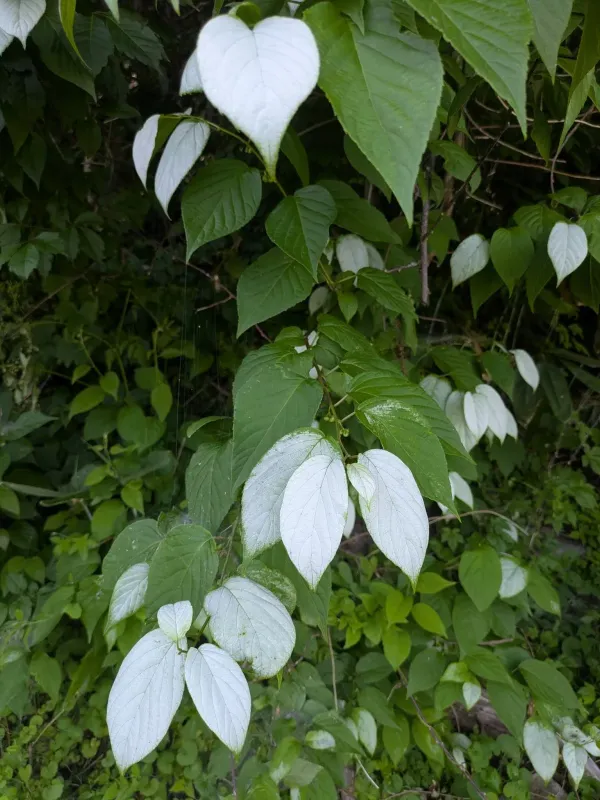
Silver vine (Actinidia polygama) is a perennial deciduous climbing vine belonging to the Actinidiaceae family. Native to the mountainous regions of Eastern Asia, specifically Japan, China, and the Russian Far East, it is well-adapted to temperate forest climates.
The plant thrives in fertile, well-draining soils rich in organic matter. While it is adaptable, it prefers a site that mimics its natural habitat: moist soil with a neutral to slightly acidic pH and a position where the base of the plant is shaded while the foliage reaches sunlight.
Proper trellis or support structures are essential for the healthy growth of this vine, as it can reach heights of several meters. Providing structural support allows for better air circulation and sunlight penetration, which are vital for successful flowering and subsequent fruit set.
Consistent moisture is key to the successful maintenance of Silver vine. During the growing season, particularly in dry spells, deep watering is necessary to prevent stress, especially since the roots are relatively shallow compared to other woody perennials.
In terms of usage, the plant is highly valued for both its ornamental appeal and its edible, vitamin-rich fruit. Its ability to cover large surfaces quickly makes it an excellent choice for vertical gardening in larger landscapes and specialized fruit orchards.
Main diseases and pests
The most unique challenge in growing Silver vine is the intense attraction it holds for cats. Similar to catnip, the leaves and stems contain nepetalactones, which drive cats to rub against and damage the plant; protective mesh or fencing for young vines is strictly recommended.
Pest issues are generally minimal, but the plant may occasionally be susceptible to scale insects or aphids. Regular monitoring of the foliage and stems can help detect any infestation early before it affects the overall vitality of the vine.
Fungal diseases such as leaf spots can occur if the planting site lacks adequate air movement or if humidity levels remain high for extended periods. Pruning the vine annually helps maintain a balanced shape and prevents the development of stagnant, disease-prone microclimates.