
Meadow saxifrage
Silaum silaus
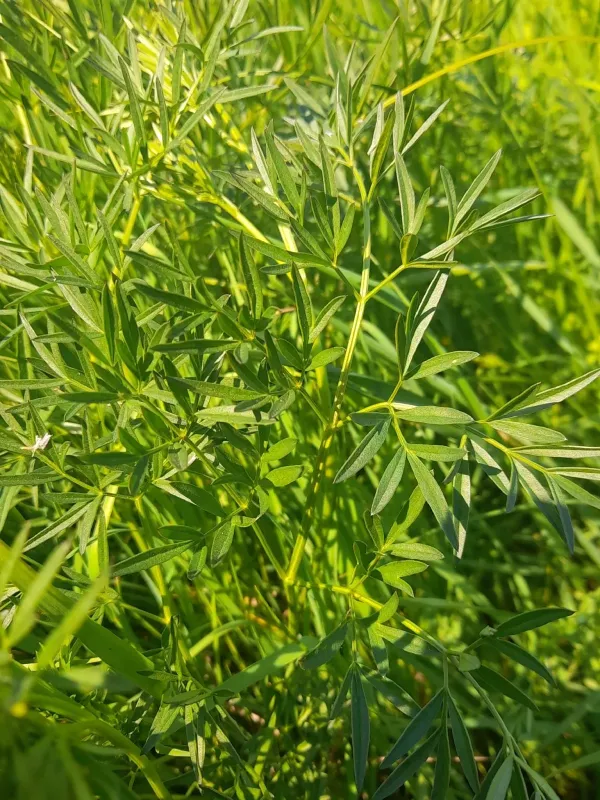
Description
Sowing dates
Meadow saxifrage (Silaum silaus) is a perennial herbaceous plant belonging to the Apiaceae family. In its natural environment, it reproduces primarily through seeds, but when introduced into cultivation or used to improve natural meadows, sowing should ideally take place in late autumn or early spring.
The seeds of this plant require a period of stratification, making autumn sowing often more successful in terms of germination rates compared to spring. The optimal sowing depth is between 1 and 2 cm, ensuring firm soil contact to maintain the necessary moisture levels for successful emergence.
In prepared fields, row sowing with 30–45 cm spacing is recommended for seed production purposes. When overseeding into existing pasture, broadcast sowing followed by light harrowing is typically used to integrate the seeds into the turf layer effectively.
During the first year of growth, the plant develops slowly, focusing on forming a basal rosette of leaves and a robust root system. Active growth, stem elongation, and flowering usually occur from the second year onwards, which is characteristic of many perennial Apiaceae species.
Success relies heavily on using fresh, high-vigor seeds, as they have a short dormancy period and can lose viability quickly if stored improperly. Ensuring proper seed handling is critical for establishing a dense and healthy stand.
Growing requirements
Meadow saxifrage is a hygrophilous plant that thrives in damp conditions, such as floodplain meadows, lowland marshes, and near water bodies. It can withstand short periods of flooding, making it a valuable constituent of plant communities in riparian zones.
The plant has moderate fertility requirements, though it performs best on loamy or peat-rich soils with a neutral to slightly acidic pH. It responds well to phosphorus and potassium fertilization, which helps promote the development of its substantial rootstock.
Regarding climate, Silaum silaus is quite winter-hardy and capable of enduring severe cold. It is not highly demanding in terms of light intensity, although its biomass production may decrease in areas heavily shaded by dense woodland canopy.
Agronomic management involves maintaining an appropriate soil moisture regime and controlling weeds during the plant's establishment phase. Once mature, the plant becomes highly competitive and effectively suppresses many invasive weeds within the sward.
To prevent thinning of the stand, it is important to avoid overgrazing, especially in spring when the soil is saturated. The plant is sensitive to trampling damage, which can negatively impact its long-term persistence in heavily utilized pastures.
Yield
Meadow saxifrage is considered a moderate-quality forage crop, but it plays a significant role as a component of early spring and summer grazing. Under favorable conditions, green matter yields can reach 15–25 tons per hectare, depending on sward density.
The crop's value lies in its ability to produce green biomass during periods when other grasses may show reduced nutritional quality. The plant has high leaf-to-stem ratios, which contributes to the overall quality of hay or silage harvested from the field.
Maximum nutritional value is observed prior to the flowering stage. As the plant transitions into the seed-bearing phase, the stems become lignified, leading to an increase in fiber content and a noticeable decrease in protein digestibility.
The plant recovers well after mowing, regenerating quickly from the basal rosette. With proper management, it is possible to obtain two full cuts per growing season, especially in areas with sufficient moisture to support continuous regrowth.
When dried as hay, Silaum silaus is palatable to livestock, particularly when mixed with other meadow grasses. It is appreciated for its mineral content and vitamin profile, which are well-preserved if the hay is cured under optimal conditions.
Main diseases and pests
Like many Apiaceae, meadow saxifrage is susceptible to fungal infections such as powdery mildew and various types of rust. Under conditions of excessive humidity, root rot can develop, damaging the subterranean parts of the plant and weakening the stand.
In terms of pests, insects that target flowers and developing seeds, such as the parsnip webworm or various mirid bugs, pose the greatest threat. Heavy infestations can significantly reduce seed yields if left unmanaged.
Aphids may infest young shoots and leaves, extracting sap and suppressing the plant's overall growth. In cases of mass infestation, the use of biological control agents is preferred over broad-spectrum insecticides, as the latter are rarely cost-effective in forage settings.
Slugs and snails may occasionally damage seedlings in damp habitats. Control measures are generally unnecessary, as this damage is typically localized and does not significantly impact the overall productivity of the meadow ecosystem.
Disease prevention is primarily achieved through good management practices, such as timely mowing and ensuring proper drainage on waterlogged sites, which improves airflow through the canopy and reduces the overall infectious pressure.
Harvesting
Harvesting for hay should ideally occur at the peak of flowering to balance total biomass yield with nutritional value. Delaying the harvest leads to stem lignification, which reduces palatability and livestock intake significantly.
For silage production, harvesting can be performed slightly earlier, at the onset of flowering. High sugar content in the plant tissues at this stage facilitates successful fermentation and results in a high-quality silage with a pleasant aroma.
When using mechanical mowers, it is crucial to set the cutting height to at least 5–7 cm. This ensures the preservation of vegetative buds located in the basal rosette, allowing the plant to regenerate successfully for subsequent cuts.
For seed production, harvest when the umbels turn a brownish hue and seeds reach the wax-ripe stage. To minimize seed shattering, a two-step harvesting method—swathing followed by threshing—is often the most efficient approach.
Once harvested, seed material must be immediately dried and cleaned. High moisture content in harvested seeds can lead to rapid self-heating and loss of germination viability, making timely post-harvest processing essential.