
Setiechinopsis mirabilis
Setiechinopsis mirabilis
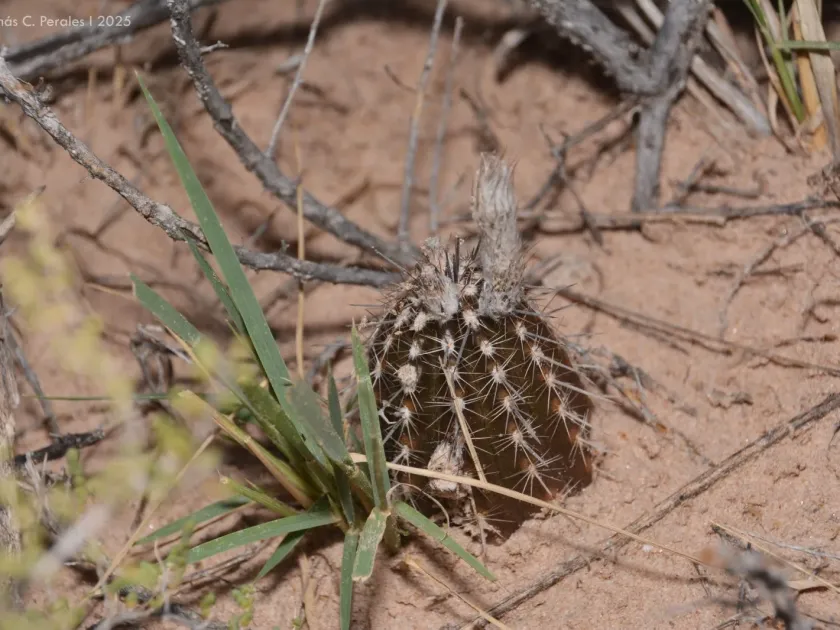
Description
Sowing dates
Setiechinopsis mirabilis belongs to the Cactaceae family and is commonly propagated in horticultural settings through seed sowing.
Sowing should ideally occur in early spring to leverage increasing daylight hours, which acts as a natural growth stimulus for the seedlings.
Seeds require a sterilized, porous substrate that ensures excellent drainage to prevent the development of damping-off pathogens during the initial stages.
Optimal germination requires consistent temperatures between 22 and 26 degrees Celsius and high humidity, usually achieved in closed propagation units.
Once seedlings develop their first true spines, the maintenance regime should shift towards reduced moisture and increased ventilation to harden the young plants.
Growing requirements
The native range of this species covers the arid regions of Argentina, requiring specific conditions that mimic its natural rocky, well-draining habitat.
The plant thrives under bright, direct sunlight, which is necessary to maintain a compact growth habit and promote the production of its characteristic white flowers.
Soil requirements involve a highly mineralized mix, including coarse sand, perlite, and small gravel, ensuring that water never stagnates near the roots.
During the growing season, watering should be strictly regulated: the substrate must dry out completely between waterings to simulate natural rainfall patterns.
Winter dormancy is critical for the long-term health of the plant, requiring a cooling period with minimal moisture and bright, indirect light.
Main diseases and pests
The primary threat to Setiechinopsis mirabilis is root and stem rot, typically caused by waterlogged soil and inadequate drainage during the active season.
Mealybugs are common pests that infiltrate the crevices between ribs, causing tissue damage and potentially introducing secondary viral or fungal infections.
Spider mites can become problematic if the plant is kept in conditions with low humidity and stagnant air, leading to scarring of the epidermis.
Integrated pest management strategies should include regular visual inspections and the use of targeted acaricides if infestations are detected.
Maintaining proper hygiene by using clean pots and avoiding excessive moisture on the plant's surface significantly lowers the risk of pathogen outbreaks.