
Sesamothamnus lugardii
Sesamothamnus lugardii
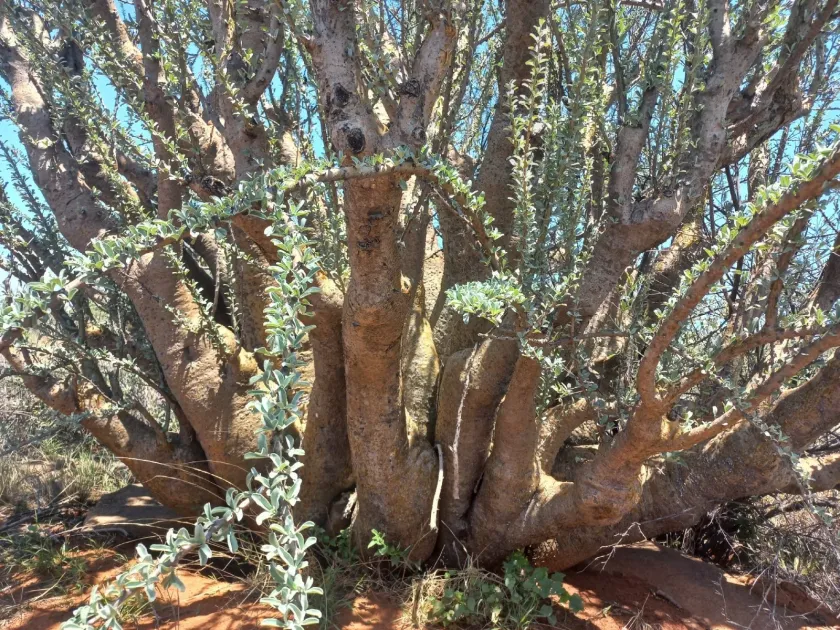
Description
Growing requirements
Sesamothamnus lugardii is a unique pachycaul succulent native to the arid regions of Southern Africa, Botswana, and Zimbabwe. Belonging to the Pedaliaceae family, it has evolved to thrive in environments with erratic rainfall and high temperatures.
The plant is defined by its thickened, woody stem or caudex, which serves as a specialized organ for water storage. This anatomical adaptation allows the species to survive prolonged droughts that would prove fatal to many other agricultural crops.
Successful cultivation requires soil that is exceptionally well-draining, such as a coarse sandy or rocky medium. It is essential to ensure that the medium does not retain moisture for extended periods, as the roots are highly susceptible to rot.
In terms of climate, the species demands high solar intensity and warmth throughout its active growth cycle. It cannot tolerate freezing conditions and should be maintained in environments that mimic its natural dry, sunny habitat.
While primarily valued as an ornamental specimen in desert landscaping, research indicates potential interest in its chemical properties, contributing to its role in specialized botanical collections.
Main diseases and pests
The most significant threat to Sesamothamnus lugardii is the development of fungal rot in the stem and root system, usually caused by overwatering or poor drainage.
Pest infestations such as spider mites and mealybugs can pose a challenge, particularly in protected environments where air circulation may be limited.
During the dormant season, the plant enters a period of reduced metabolic activity; during this phase, any moisture accumulation around the roots is detrimental.
Integrated pest management strategies should prioritize mechanical removal of pests and the application of appropriate systemic treatments when necessary.
Maintaining high hygiene standards in the growing medium, such as using sterilized substrate and pots with adequate drainage holes, is the best preventative measure against pathogens.