
Serapias nurrica
Serapias nurrica
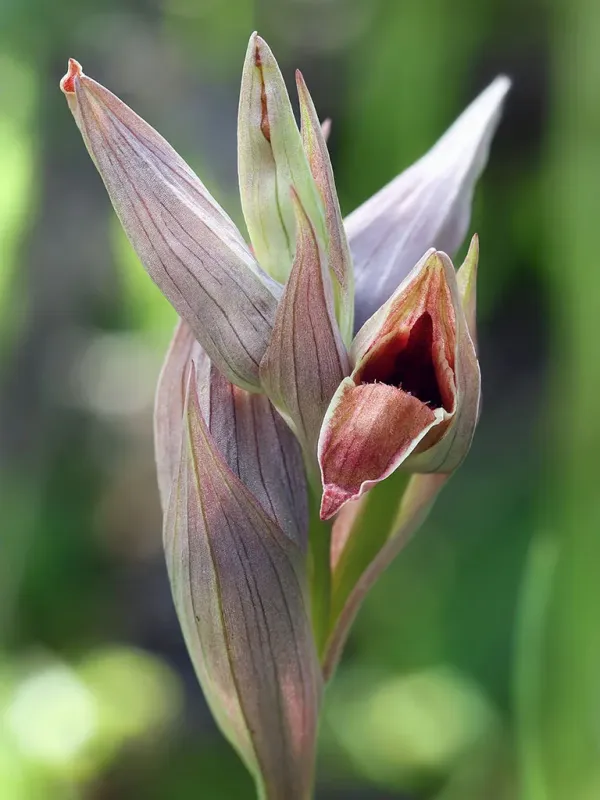
Description
Growing requirements
Serapias nurrica is a perennial herbaceous plant belonging to the Orchidaceae family. It is a Mediterranean orchid, primarily recognized for its unique morphology and adaptation to specific ecological niches within the western Mediterranean basin.
Regarding climatic requirements, the plant thrives in regions with mild winters and hot, dry summers. It is not cold-hardy and requires a protected environment in colder regions to prevent freeze damage to its succulent-like tubers.
The substrate must provide exceptional drainage to mimic the rocky or sandy soils of its native habitat. A slightly alkaline to neutral soil pH is preferred, as this prevents common physiological disorders related to nutrient uptake.
Botanically, it is characterized by two egg-shaped tubers and a stem typically reaching 20 to 40 cm in height. The inflorescence consists of distinct reddish-brown flowers, which serve as a specialized mechanism for attracting specific pollinators.
Its хозяйственное use is largely restricted to ornamental gardening for specialist collectors and scientific interest. Due to its status, it is not cultivated as a broad-acre agricultural crop but rather managed as a specialty botanical interest.
Main diseases and pests
Disease management is centered on preventing fungal pathogens such as Rhizoctonia, which thrive in stagnant, poorly drained potting media. Overwatering is the most common cause of crop failure in greenhouse cultivation.
Insect pests, particularly slugs, snails, and aphids, are the primary biological threats. Management strategies include physical barriers for mollusks and integrated pest management (IPM) practices to maintain plant health without chemical stress.