
Semiarundinaria yashadake
Semiarundinaria yashadake
Description
Growing requirements
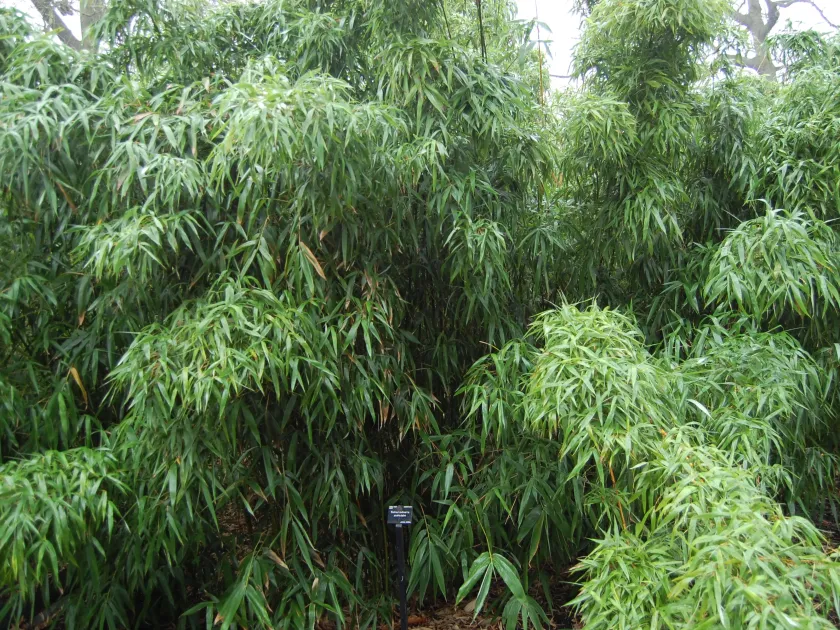
Semiarundinaria yashadake is a striking perennial bamboo belonging to the Poaceae family, highly valued for its elegant stature and deep purple-hued culms. When exposed to direct sunlight, its stems develop a distinctive dark coloration, making it a prized specimen for gardens.
The plant thrives in moist, well-draining, fertile soils with a slightly acidic to neutral pH. It is essential to protect the bamboo from harsh, drying winds, especially during the colder months, to prevent leaf desiccation and damage.
This bamboo is moderately cold-hardy, typically surviving temperatures down to -15...-18°C. In colder regions, applying a thick layer of organic mulch around the base is recommended to shield the rhizomes from deep frost and ensure vigorous spring growth.
Semiarundinaria yashadake prefers full sun to light shade. Abundant sunlight is a key requirement for the development of its unique purple stem color, as deep shade tends to produce greener, less intense coloration and may weaken the plant's structural density.
Standard cultivation practices include consistent watering during dry spells and the application of nitrogen-rich fertilizers in early spring. Due to its vigorous rhizomatous growth, it is often necessary to install underground barriers to contain the plant within the desired area.
Main diseases and pests
Semiarundinaria yashadake is generally robust, though it can be susceptible to spider mites in environments with low humidity. Regular misting or monitoring of the foliage can help detect and mitigate such infestations.
Poor soil drainage can lead to root rot and other fungal pathogens. Ensuring that the planting site has excellent water permeability is the most effective preventative measure against these soil-borne issues.
White grubs and other soil insects may occasionally feed on the rhizomes, especially in young plantings. If damage is observed, applying targeted organic soil treatments can help protect the root system and restore the plant's health.
Weed management is most important during the first one or two years of the plant's establishment. Once the bamboo grove has matured, its own dense foliage and root network effectively outcompete most common garden weeds.
Overall, with appropriate site selection and basic maintenance, this bamboo species is highly resistant to pests and diseases. Providing consistent care ensures that the plant remains a beautiful, long-term feature of the landscape.
Harvesting
The primary use of this species is in landscape design, where it is utilized for privacy screens, hedges, or as a focal point in ornamental gardens. Its ability to form dense clusters makes it an excellent choice for natural fencing.
While bamboo shoots are edible, this particular species is cultivated primarily for its aesthetic qualities. Mature culms can be harvested to create lightweight garden supports, craft materials, or rustic decorative structures for home interiors.
Active growth of new culms occurs in mid-summer. Ensuring the plant receives adequate nutrients and water during this phase is critical for the development of high-quality, straight stems suitable for structural use.
Harvesting for material purposes is typically performed when stems are three to four years old, ensuring maximum hardness and maturity. Proper timing is essential for durability in any finished products crafted from the culms.
Post-harvest, the culms should be dried slowly in a shaded, well-ventilated area to prevent cracking. This curing process is vital for ensuring the longevity of the material used in garden projects or interior design.