
Sea daffodil
Pancratium maritimum L.
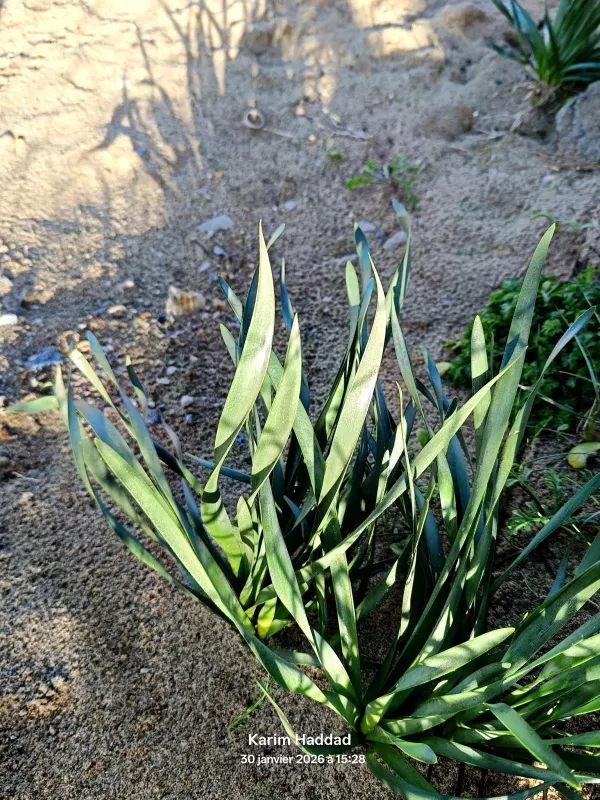
Description
Sowing dates
Sowing seeds of the sea daffodil should be carried out in a controlled greenhouse environment to ensure optimal germination. Spring is the most suitable time for sowing, as temperatures begin to rise consistently.
The seeds possess a tough outer coat, making pre-sowing stratification essential for success. They should be planted at a depth of about 2–3 centimeters in a well-draining, sandy substrate.
Germination is a slow and often irregular process, which can take several weeks or even months. Maintaining constant moisture without waterlogging the soil is critical during the initial development phase.
Vegetative propagation via bulb offsets is the preferred commercial method for multiplying sea daffodil stocks. Offsets are carefully separated from the parent bulb during the plant's dormant season.
Once separated, offsets should be replanted immediately or stored in a cool, dry place. Proper spacing of 20–30 centimeters is necessary to prevent overcrowding and to ensure vigorous development of the root system.
Growing requirements
Pancratium maritimum, a member of the Amaryllidaceae family, is a specialized halophyte adapted to coastal dunes. It thrives in full sunlight and requires a location that mimics its native Mediterranean habitat.
The soil must be extremely well-draining and sandy; heavy or clay-based soils are unsuitable as they cause the bulbs to rot. The plant is perfectly adapted to saline environments and can withstand high mineral concentrations.
While the plant is highly drought-tolerant due to its succulent-like bulb, consistent but moderate watering during the active growing season promotes healthier flowers and leaf formation.
The sea daffodil prefers mild subtropical climates and is susceptible to severe frost. In colder regions, the bulbs must be lifted before winter or grown in containers that can be moved indoors.
Nutritional requirements are relatively low; however, light fertilization with a balanced, slow-release formula for bulbous plants can enhance blooming. Over-fertilization should be strictly avoided to prevent foliage damage.
Main diseases and pests
The primary threat to the sea daffodil is excessive soil moisture, which inevitably leads to bulb rot and fungal pathogens. Ensuring excellent drainage is the most effective preventative measure against these diseases.
Pests such as the narcissus bulb fly can severely damage the plant by boring into the basal plate. Regular inspection and prophylactic insecticide treatments are necessary in intensive cultivation systems.
Spider mites may occasionally infest the foliage, particularly in dry and poorly ventilated conditions. Management involves maintaining appropriate humidity levels and using acaricides if an infestation is detected.
Viral infections can manifest as mottled leaves and reduced flowering capacity. Infected plants should be removed and destroyed immediately to prevent the spread of the virus to healthy stock.
Weed competition can significantly inhibit the growth of sea daffodils. Maintaining a clean and weed-free area ensures that the bulbs receive adequate light and nutrient availability throughout the season.
Harvesting
Harvesting for bulb production occurs in late summer once the foliage begins to senesce and turn yellow. This signifies that the energy has been fully transferred back into the bulb for storage.
Bulbs are lifted carefully using a pitchfork to avoid nicks or bruises, which can serve as entry points for pathogens. After lifting, the bulbs are cleaned of debris and inspected for any signs of decay.
Drying or curing the bulbs is a vital step, conducted in a shaded, well-ventilated area for approximately two weeks. This process allows the outer scales to harden, protecting the bulb during storage.
For ornamental cut flower production, blooms are harvested in the early morning when they are at their peak. Proper handling ensures that the delicate flowers retain their characteristic fragrance and longevity.
All harvesting tools and equipment must be disinfected after use to prevent cross-contamination between batches. Proper storage conditions, including cool temperatures and low humidity, are essential for maintaining bulb viability until the next planting season.