
Lithodora diffusa
Lithodora diffusa (Lag.) I. M. Johnst.
Description
Growing requirements
Lithodora diffusa is a low-growing, evergreen subshrub belonging to the Boraginaceae family. Originally native to the mountainous regions of Southern Europe, it is well-adapted to rocky, acidic environments where it creeps along the ground.
The culture has very specific soil requirements, demanding acidic, well-draining soil to thrive. In alkaline or neutral soils, the plant struggles to uptake nutrients, often leading to chlorosis and eventual decline, making soil preparation the most critical step.
It performs best in full sun but appreciates some light afternoon shade in hotter climates to prevent leaf scorching. The plant is drought-tolerant once established but needs consistent moisture during its initial growth phase.
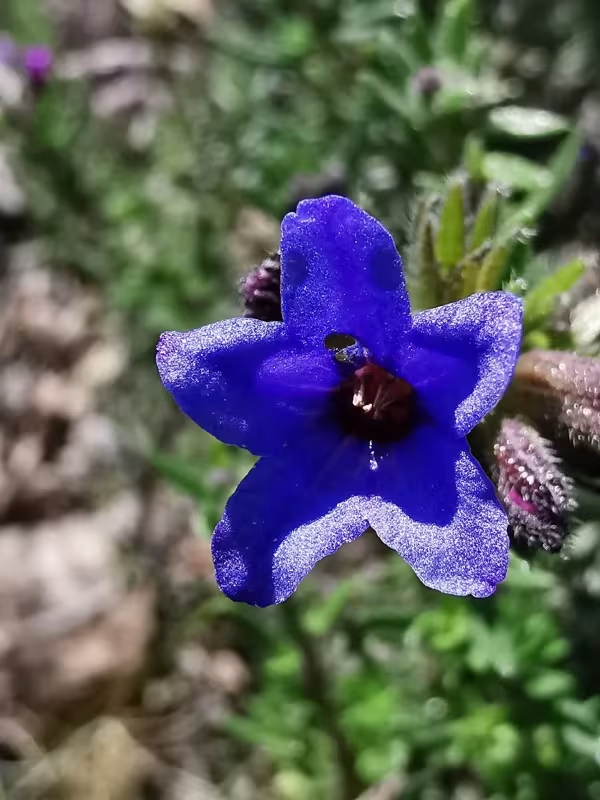
Botanically, it features narrow, dark green, hairy leaves on woody, trailing stems. Its most distinct feature is the profusion of brilliant, star-shaped blue flowers that bloom throughout late spring and early summer.
In landscaping, it is highly valued as a groundcover for rock gardens, stone walls, and slopes. Its ability to form a dense, vibrant blue mat makes it a popular choice for rockery borders and low-maintenance ornamental garden designs.
Main diseases and pests
Root rot is the most common threat to Lithodora diffusa, typically occurring in areas with heavy clay soils or poor drainage. Excess water around the root zone remains the primary cause of plant failure.
Pests are generally not a significant issue for this species. However, aphids can occasionally infest the flower buds during active growth, requiring gentle insecticidal soap treatments if the infestation becomes heavy.
Iron deficiency, manifesting as chlorosis, occurs when the soil pH is too high. This is not a pest or disease but a physiological disorder that requires acidification of the soil to restore green color to the foliage.
Powdery mildew may develop in poorly ventilated environments with high humidity. Ensuring proper plant spacing and avoiding overhead watering helps to keep the foliage dry and healthy.
Winter injury can occur in colder climates if the plant is exposed to alternating freezing and thawing cycles without adequate protection. A light mulch around the base can help stabilize root temperatures during harsh winter months.