
Scopolia japonica
Scopolia japonica
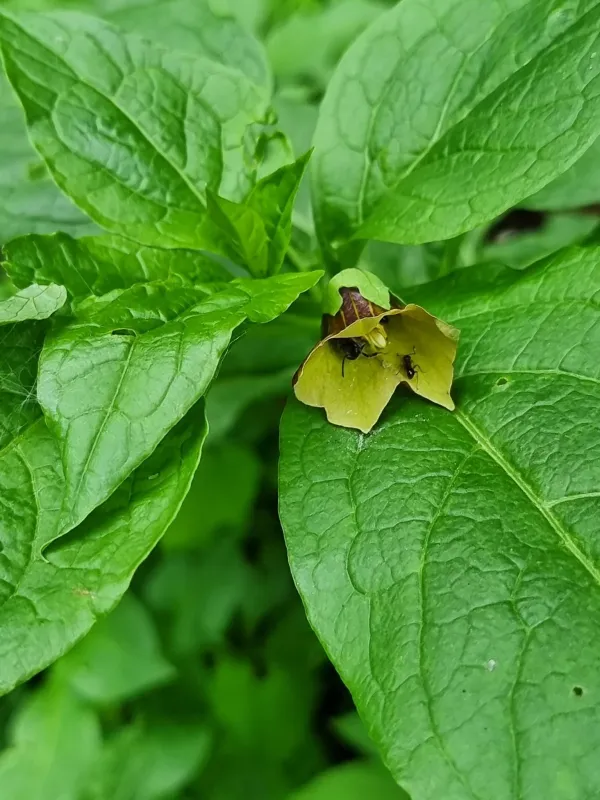
Description
Sowing dates
Scopolia japonica is a perennial herbaceous plant belonging to the Solanaceae family. It is typically propagated through seeds or by the division of rhizomes, which is the most common method in professional medicinal herb cultivation.
Seeds require a period of stratification to break dormancy and ensure uniform germination. They are sown in well-prepared seedbeds during late autumn or early spring, ensuring that the soil remains moist throughout the germination period.
When using rhizome division, the planting material is carefully selected from healthy, mature mother plants. Segments containing viable dormant buds are planted at a depth of 10–15 centimeters in well-drained, nutrient-rich soil.
Proper spacing between rows, typically around 60 centimeters, is essential to allow for adequate ventilation and easy mechanical or manual weeding during the early stages of growth.
Establishing the crop requires careful preparation of the soil profile, ensuring it is loose enough to allow the rhizomes to expand properly as the plant matures over several years.
Growing requirements
The plant thrives in temperate climates and prefers partially shaded environments, as intense direct sunlight can cause stress and reduce the quality of the phytochemical compounds.
Rich, loamy soils with a high organic matter content and good drainage are essential. The crop is highly sensitive to waterlogging, which can quickly lead to root rot and other fungal diseases.
Adequate soil moisture must be maintained throughout the growing season. Irrigation should be applied strategically, particularly during dry spells, to prevent plant wilting without causing soil saturation.
Soil pH should ideally be neutral or slightly acidic. Adjusting the pH through liming or the application of organic matter helps optimize the availability of essential nutrients for the plant.
While the plant is hardy and can withstand cold winters, it benefits from a protective layer of mulch or consistent snow cover to shield the roots from extreme freezing temperatures.
Yield
The primary economic value of Scopolia japonica lies in the high concentration of tropane alkaloids found within the rhizomes. These compounds are highly sought after by the pharmaceutical industry.
The plants are generally harvested when they are three to four years old, which is the optimal time for the accumulation of active substances like scopolia alkaloids.
Yield estimation is based on the dry weight of the harvested rhizomes per unit area. Proper crop rotation and soil management techniques are vital to maintain the fertility required for sustained yield over several harvest cycles.
Biological monitoring is used to assess the plant's health and the peak concentration of active ingredients, ensuring that the harvest occurs at the precise moment of maximum potency.
Yield stability is strongly influenced by the consistency of the growing environment and the prevention of pest outbreaks throughout the lengthy maturation period of the crop.
Main diseases and pests
The main threats to this crop include fungal pathogens that attack the root system, often encouraged by improper drainage or excessive soil moisture levels during humid periods.
Leaf-eating pests, including various beetle species and aphids, can significantly reduce the foliage area, thereby hindering the plant's ability to store energy in its rhizomes.
Effective management strategies involve the use of integrated pest management (IPM) practices, emphasizing preventative measures such as crop rotation and the removal of host weeds from the field.
Chemical control must be used with caution, adhering to strict withdrawal periods to ensure that the medicinal quality of the harvested rhizomes remains unaffected and safe for processing.
Regular inspection of the plantations allows for early detection of disease symptoms, facilitating targeted interventions that prevent the spread of infections to healthy parts of the field.
Harvesting
The harvesting process involves excavating the rhizomes, usually in the autumn after the aerial parts of the plant have died back, which is when the alkaloid content is at its peak.
Once harvested, the rhizomes must be cleaned immediately to remove all soil particles and extraneous matter. Thorough washing is required to ensure the purity of the raw material.
The drying process is conducted at controlled temperatures, typically below 60 degrees Celsius, in well-ventilated areas to prevent the degradation of heat-sensitive chemical compounds.
After drying, the rhizomes are sorted and inspected for quality before being packed and transported to storage or directly to the manufacturing facilities for pharmaceutical extraction.
Storage facilities must be dry, cool, and well-protected from pests to ensure the long-term preservation of the medicinal quality and chemical stability of the harvested roots.