
Spotted golden thistle
Scolymus maculatus L.
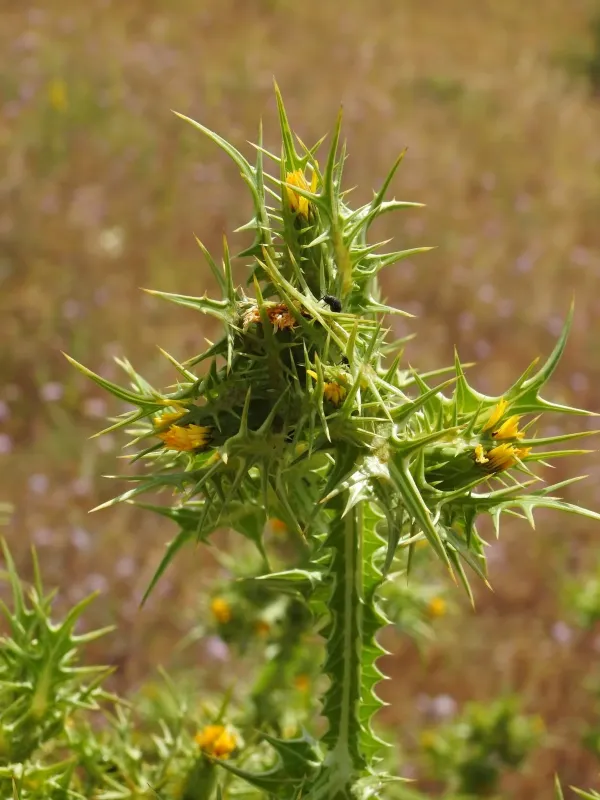
Description
Sowing dates
Scolymus maculatus is typically sown in early spring, once the soil temperature is high enough to support rapid germination and initial growth.
The seeds should be planted in well-prepared seedbeds with a depth of about 2 to 3 centimeters to ensure optimal soil contact and moisture.
Spacing between rows should be maintained at 50–60 centimeters, which provides sufficient space for the plant to form its characteristic rosette.
Adequate soil moisture is crucial during the germination phase to ensure a uniform stand and high plant density across the field.
In regions with mild winters, direct seeding in late autumn is also possible, which often leads to earlier spring development.
Growing requirements
This crop thrives in sunny, well-lit environments, as shade significantly reduces both the quality and yield of the harvested biomass.
Well-drained sandy loam or loamy soils are ideal, as they allow the taproot to develop straight and avoid issues with rot or deformation.
The plant is highly drought-tolerant once established, thanks to its deep root system, but prefers consistent moisture during the growing season.
Soil pH should ideally be neutral or slightly alkaline, which supports optimal nutrient uptake and promotes vigorous foliage growth.
Good ventilation within the crop canopy is essential to minimize the impact of humidity-related pathogens and promote healthy plant structure.
Yield
The yield of Spotted golden thistle is heavily influenced by soil fertility and the availability of nitrogen and phosphorus during the growth phases.
Under favorable management practices, the plant can produce substantial biomass, making it a viable crop for specialized vegetable markets.
Both the vegetative parts and the roots are harvestable, with the root yielding significantly once the plant has completed its vegetative cycle.
Consistent irrigation and weed management during the first month of development are the most critical factors for maximizing final yield.
Strategic fertilizer application, particularly before the peak growth period, can noticeably improve the quality and weight of the root system.
Main diseases and pests
Fungal diseases, including powdery mildew, are the most common issues, particularly when the crop is planted too densely or in poor air circulation.
Root rot is a significant threat in areas with heavy or waterlogged soils, requiring proper drainage systems to prevent total crop loss.
Insect pests like aphids can attack the tender leaves during the early vegetative stage, necessitating careful monitoring and early intervention.
Implementing a strict crop rotation cycle is recommended to reduce the buildup of soil-borne pathogens and pests in the field.
Using integrated pest management strategies, such as biological control agents, can keep pest populations below the economic injury level.
Harvesting
Leaves are harvested selectively throughout the season before the plant begins to bolt and produce its flowering stems, which are less palatable.
The main harvest of the roots is conducted after the first season when they have reached their peak size and nutrient storage capacity.
Mechanical harvesting equipment should be calibrated to dig deep enough to avoid damaging the long, slender roots of the plant.
After harvesting, the produce should be cleaned, trimmed of foliage, and cooled immediately to maintain freshness and prevent dehydration.
Proper post-harvest handling ensures that the roots retain their texture and nutritional profile, extending their shelf life for the consumer market.