
Spanish oyster plant
Scolymus hispanicus L.
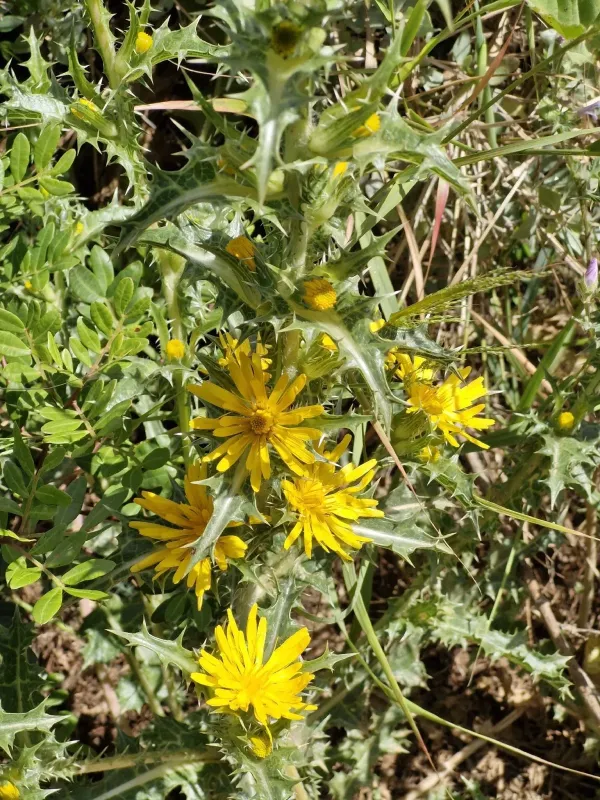
Description
Sowing dates
The Spanish oyster plant is typically cultivated as an annual or biennial crop. Sowing should commence in early spring as soon as the soil reaches a temperature of 10-12 degrees Celsius.
Direct seeding in open fields is recommended for April. In regions with cooler climates, starting seeds in individual trays helps ensure a robust transplant by late spring.
Seeds are sown at a depth of 2-3 centimeters with row spacing of 45-60 centimeters to allow enough space for future weeding and air circulation.
Uniformity in sowing is critical; as plants emerge, thinning is required to maintain a spacing of 20-30 centimeters between individual plants within each row.
Proper soil preparation, including loosening the substrate to a depth of 30 centimeters, is essential to facilitate straight and long root development.
Growing requirements
This crop thrives in full sun, requiring exposure to direct light for most of the day to ensure proper leaf development and nutrient storage in the roots.
Well-drained, sandy or loamy soils are ideal. Heavy or rocky soils should be avoided as they cause the roots to fork or grow crooked, reducing their market value.
Spanish oyster plant is relatively drought-tolerant once established, but consistent irrigation during the first growth phase is necessary for the best texture.
It prefers mild climates with temperatures between 18 and 25 degrees Celsius. Extreme heat or waterlogging during the root maturation phase can lead to internal defects.
Fertilization should be moderate, focusing on potassium to support root growth rather than excessive nitrogen, which favors vegetative mass over edible yield.
Yield
The yield of the Spanish oyster plant is significant when grown under optimal conditions, often ranging from 15 to 25 tons per hectare in commercial settings.
The edible fleshy roots, which can grow up to 30 centimeters long, are the primary harvest target, though young spring leaves are also consumed as a delicacy.
Total production is highly dependent on effective weed management, as the plant grows slowly during the first several weeks of its lifecycle.
Crop rotation plays a major role in sustained yield; planting after cereals or legumes helps maintain soil fertility and reduces the risk of soil-borne pathogens.
Standardized harvest methods ensure that the majority of the crop reaches commercial size, with roots weighing between 200 and 400 grams on average.
Main diseases and pests
Wireworms represent a significant threat to young plants by boring into the developing roots, which can render them unsuitable for human consumption.
Fungal diseases like Fusarium wilt may occur in poorly drained fields, causing root decay and wilting of the above-ground parts of the plant.
Aphids can be problematic during hot summer months, clustering on the undersides of leaves and sucking plant sap, thereby reducing plant vigor.
Powdery mildew can appear late in the season, particularly if night humidity is high, leading to premature yellowing of the foliage.
Integrated pest management strategies, such as crop rotation and the removal of plant debris, are recommended to minimize reliance on synthetic pesticides.
Harvesting
Harvesting usually occurs in late autumn when the leaves begin to turn yellow and dry, indicating that the root has reached its maximum maturity.
Manual digging or the use of mechanical root lifters is required to prevent breaking the brittle skin of the roots during the extraction process.
Once harvested, roots should be washed carefully, trimmed of excess foliage, and allowed to air-dry in a shaded area to remove surface moisture before storage.
Optimal storage conditions involve cool, dark, and humid environments, such as root cellars, where temperatures are kept just above freezing.
Timely harvest is crucial because if left in the ground during winter, the roots may become woody or start to re-sprout, which ruins their culinary quality.