
Wichura's bulrush
Scirpus wichurae
Description
Growing requirements
Wichura's bulrush is a perennial herbaceous plant belonging to the Cyperaceae family. It is native to the regions of East Asia, including Japan and parts of the Russian Far East. This species thrives in wetlands, marshes, and along the banks of stagnant or slow-moving water bodies.
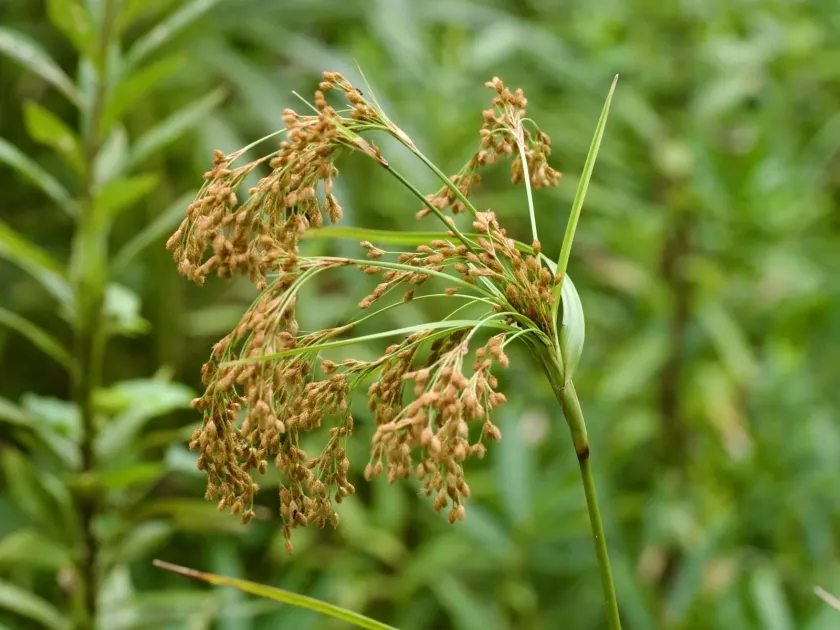
Botanically, it is characterized by a strong rhizome system and upright, reed-like stems that can reach significant heights. The leaves are linear and form dense clumps at the base. The inflorescence consists of complex panicles with multiple spikelets, giving the plant a distinct architectural appearance.
To successfully cultivate this species, high soil moisture must be maintained throughout the growing season. It performs best in heavy clay or silty soils rich in organic matter. The plant exhibits high light requirements, though it can tolerate light shade for parts of the day.
Regarding agricultural practices, Wichura's bulrush is valued for its hardiness and efficiency in land stabilization. It is widely used for erosion control on riverbanks and for phytoremediation purposes, as it effectively filters pollutants from agricultural runoff and wastewater.
In terms of economic utility, the dry stalks are utilized in handicraft production, such as weaving mats or creating sustainable packaging materials. Its role in landscape architecture is also notable, as it is used to provide a naturalistic, wild aesthetic to constructed wetlands and garden ponds.
Main diseases and pests
The primary threats to the health of these plants are fungal pathogens that thrive in conditions of stagnant air and excessive humidity. Stem rot can occur if the water circulation is poor or if the density of the planting is too high.
Pests such as aphids or spider mites are generally occasional visitors and do not pose a massive threat to established populations. However, in enclosed or nursery conditions, monitoring is necessary to prevent localized outbreaks.
Invasive weeds typically only represent a challenge during the establishment phase. Once the root network is well-developed, Wichura's bulrush acts as a dominant species, effectively crowding out most common weeds in the area.
Extreme environmental stress, such as prolonged drought, can drastically damage the plant's ability to recover. Since the species relies on water, irrigation must be ensured during unexpected dry spells to prevent premature senescence of the foliage.
Regular maintenance involves thinning and dividing the rhizomes every several years to maintain vigor. This practice prevents the accumulation of dead biomass and promotes the emergence of healthy new stalks, ensuring the long-term productivity of the planting.