
Scilla litardierei
Scilla litardierei
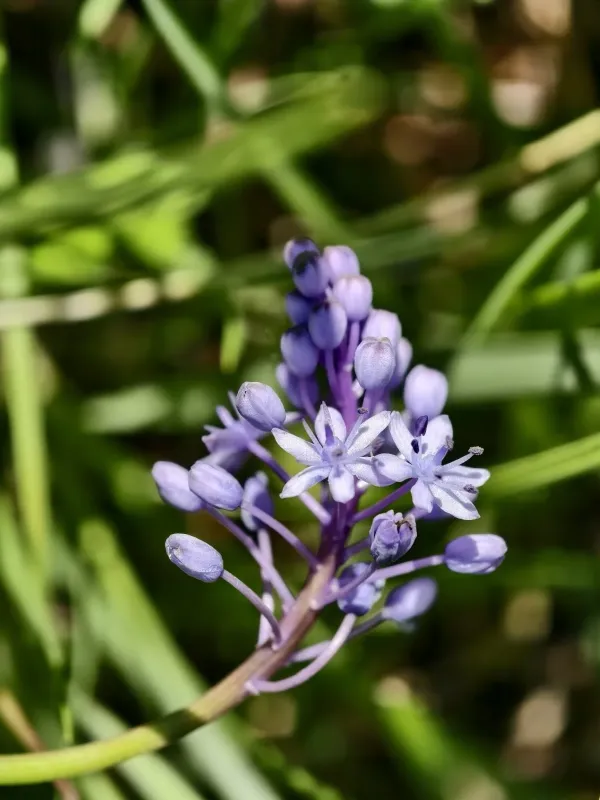
Description
Sowing dates
The planting of Scilla litardierei bulbs is best performed in the autumn season, typically several weeks before the ground freezes. This allows the root system to establish itself effectively before the onset of winter dormancy.
Before planting, the soil should be loosened and enriched with organic matter to provide a fertile base. Bulbs should be set at a depth equivalent to three times their height, which ensures protection from both cold and potential mechanical damage.
Spacing is essential for the healthy development of this perennial. A distance of 10–15 centimeters between bulbs is recommended to prevent overcrowding and to allow for the natural propagation of daughter bulbs over subsequent years.
After placing the bulbs in the soil, light watering is recommended to settle the earth. If the site features heavy clay, adding coarse sand at the base of each hole is a standard practice to improve drainage and prevent bulb rot.
Once established, the plants will naturally multiply, creating dense and attractive colonies that require minimal human intervention for several years before needing division.
Growing requirements
Scilla litardierei, a member of the Asparagaceae family, thrives in well-drained, fertile soil. It is particularly fond of loamy or sandy-loam compositions that maintain moderate moisture levels throughout the spring.
Regarding light exposure, the plant is versatile. It performs well in full sun, though it is famously adaptable to partial shade, often thriving under the canopy of deciduous trees where it benefits from early spring sun before the leaves emerge.
The climate requirement is characterized by temperate resilience. As a species native to the Balkans, it is well-equipped to handle colder winters, provided that the soil is not excessively wet during the freezing months.
Moisture management is critical during the active growth period. While the plant requires regular hydration, standing water must be avoided to prevent bulb degradation, which is the most common cause of failure in cultivation.
Fertilization with potassium-rich nutrients in the autumn helps the plant store energy for the subsequent spring. This simple practice significantly enhances the color intensity and the duration of the blooming period.
Main diseases and pests
Fungal infections, primarily grey mold and various forms of bulb rot, are the most significant threats to Scilla litardierei. These issues are almost always linked to poor drainage and high humidity levels during the cooler months.
Pests such as bulb flies can infest the underground portions of the plant. A proactive approach, including the inspection of bulbs prior to planting and keeping the growing area free of debris, significantly minimizes pest pressure.
Rodents such as mice can pose a problem in garden environments. Utilizing protective mesh or deterrents during the planting process can safeguard bulbs from being consumed or displaced during the winter.
Viral pathogens may sometimes affect the foliage, leading to yellowing or stunted growth. Any infected plants must be removed and discarded far from the main patch to prevent the spread of the virus to healthy individuals.
Maintaining a weed-free environment is not just an aesthetic choice but an agronomic necessity. Weeds can harbor insects and pathogens, and their removal ensures that the soil surface dries out properly, preventing the growth of moss and fungi.