
Schrebera trichoclada
Schrebera trichoclada
Description
Growing requirements
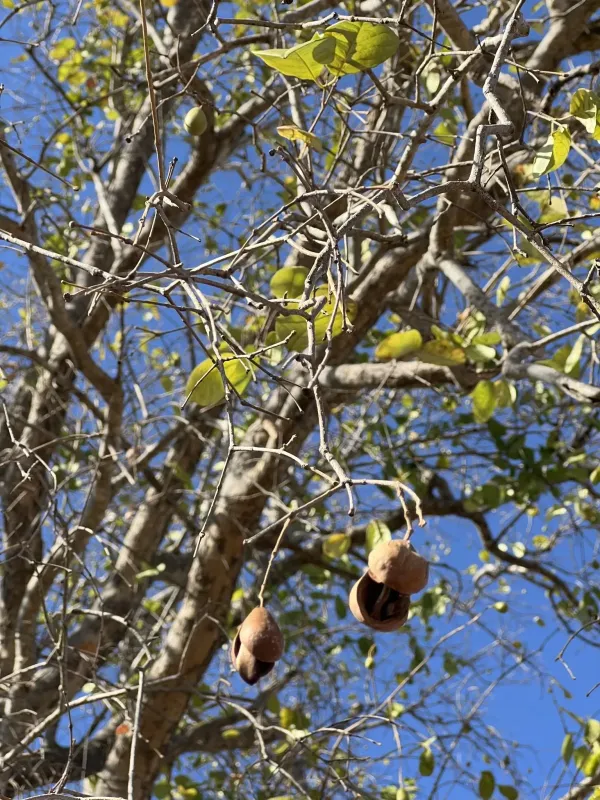
Schrebera trichoclada is a deciduous tree belonging to the Olive family (Oleaceae). In its natural habitat, the plant reaches a height of up to 10–12 meters and possesses a spreading canopy, allowing it to form dense clusters in dry woodland environments.
The plant is a typical representative of tropical African flora. It is most commonly found in savannas and woodlands across countries such as Botswana, Zimbabwe, Mozambique, and Namibia, where it has successfully adapted to distinct seasonal moisture variations.
The crop has specific requirements for soil drainage. It thrives best in sandy loam or rocky soils, which facilitate free air circulation and prevent waterlogging around the root system during the intense rainy seasons.
Climate preferences for this species include a distinct dry dormant period, which stimulates biological flowering processes. Schrebera trichoclada demonstrates high resilience to drought conditions and intense solar radiation typical of the African highlands.
Economic use of the tree primarily involves local timber harvesting. The hard and durable wood of this species is highly valued in traditional crafts for manufacturing household tools, handles for agricultural implements, and structural elements used in farming.