
Schotia capitata
Schotia capitata
Description
Growing requirements
Schotia capitata, commonly known as the dwarf boer-bean, is a small tree or shrub belonging to the Fabaceae family, native to the southeastern regions of Africa.
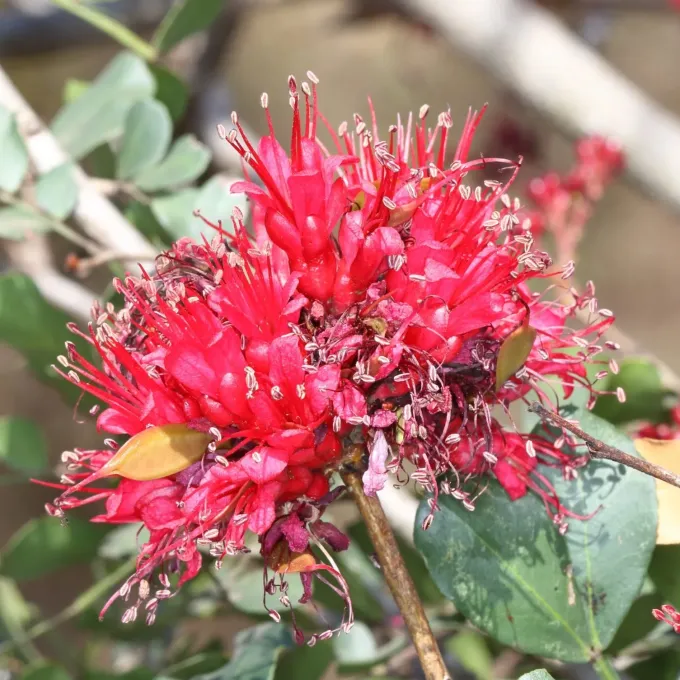
This species thrives in warm, frost-free climates and requires full sunlight to produce its signature vibrant red blossoms that appear directly on the stems.
Regarding soil requirements, it prefers well-drained, fertile soil. It is relatively drought-tolerant once established, but regular irrigation is essential during the active blooming season.
Botanically, it features attractive, glossy, compound leaves and clustered red flowers. The tree is highly appreciated by birdwatchers, as the nectar-rich flowers attract various bird species.
In terms of practical use, it is widely utilized in landscape design as a decorative specimen or a screening plant in subtropical garden environments where space is limited.
Main diseases and pests
Like many subtropical legumes, Schotia capitata can be prone to powdery mildew if the air circulation around its dense canopy is inadequate.
Sap-sucking insects like aphids or spider mites may occasionally infest young leaves, particularly when the tree is grown in container environments or poorly ventilated greenhouses.
Root rot is the most serious threat, usually caused by waterlogged soil conditions. Ensuring that the planting site has excellent drainage is critical for tree longevity.
Cultural control, such as removing affected branches and ensuring optimal spacing, is usually sufficient to manage most pest and disease problems.
Regular monitoring of the foliage and adjusting the watering schedule based on seasonal needs are the most effective ways to keep the tree in good health.