
White Schoenolirion
Schoenolirion albiflorum
Description
Growing requirements
White Schoenolirion (Schoenolirion albiflorum) is a perennial flowering plant within the Asparagaceae family. Native to the southeastern United States, it is primarily found in wetland environments and moist meadows.
The plant requires well-drained but consistently moist soil to thrive. Rich, organic-heavy substrates mimic its natural boggy habitats and support the development of its fleshy root system, which is vital for nutrient uptake.
Sunlight requirements include full sun to partial shade. In its natural range, the plant is adapted to open, wet landscapes, meaning it performs best in positions where it receives at least six hours of indirect or direct light daily.
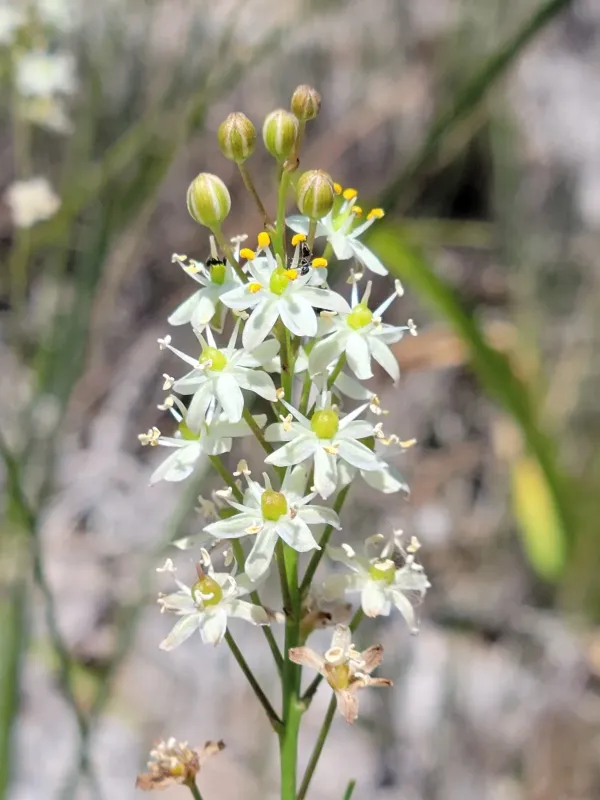
Botanically, it features a rosette of grass-like basal leaves and produces tall racemes of white flowers. These flowers typically bloom in the spring, providing a significant ornamental display that is highly valued in specialty gardening.
Cultivation practices focus on simulating natural moisture cycles. While the plant is hardy, it requires protection from extreme dry spells which can hinder growth and reduce the quality of the subsequent year's flowering cycle.
Main diseases and pests
The primary concern for White Schoenolirion in domestic gardens is the risk of fungal root pathogens. These develop predominantly in stagnant conditions where poor aeration occurs in the soil profile.
Pests such as snails and slugs are a recurrent issue, particularly for young plants. Their feeding activity can significantly damage the succulent foliage if not managed through manual removal or physical barriers.
Aphids may infest the plant during the early flowering stages, gathering on the flower stalks. Effective control involves soap-based solutions or targeted horticultural oils to preserve the integrity of the blooms.
Soil-borne diseases can be mitigated by ensuring proper spacing between individuals to allow for sufficient air circulation. Overcrowded conditions increase humidity and attract airborne fungal spores.
Regular monitoring of the leaf health is essential. Any signs of yellowing or spotting should be addressed promptly to prevent the spread of infection throughout the clump of plants.