
Florida boxwood
Schaefferia frutescens
Description
Growing requirements
Florida boxwood (Schaefferia frutescens) is a significant woody species belonging to the Celastraceae family. It typically grows as an evergreen shrub or a small tree in its native habitat.
The plant is native to the Caribbean, Central America, and Florida. It thrives in various ecological zones, primarily favoring limestone-based soils and well-drained, dry coastal forest environments.
Regarding climate, the plant demands warm, frost-free conditions. It is well-adapted to high levels of sunlight and can tolerate periods of moderate drought, which makes it a resilient choice in certain landscapes.
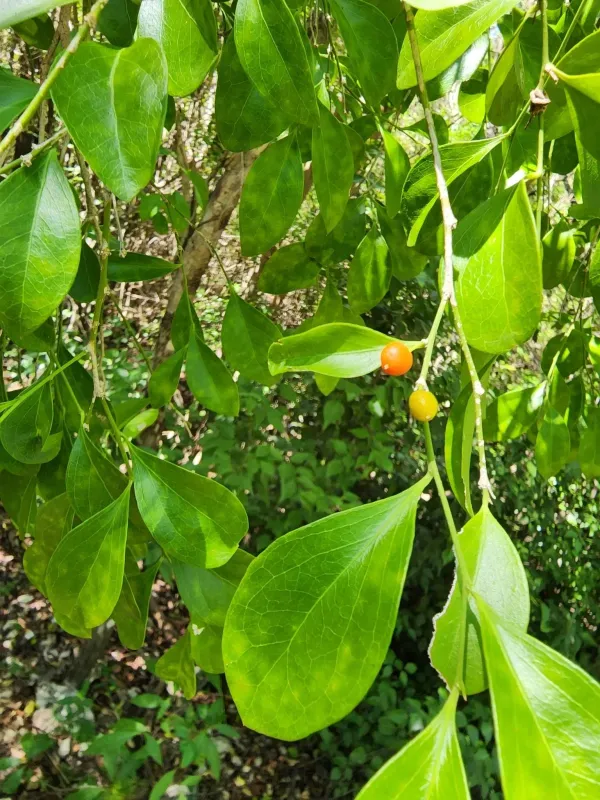
Botanically, it is characterized by its stiff, leathery leaves and distinctive bright red, fleshy fruits. These drupes are a common food source for various birds, facilitating seed dispersal in the wild.
From an agricultural and economic perspective, the wood of this plant is noted for its hardness and durability, traditionally used in cabinetry and the production of small wooden implements.
Main diseases and pests
The primary threats to this shrub include infestation by scale insects and mites, which can cause significant damage to the foliage and overall vigor of the plant during hot, dry spells.
Root rot, induced by waterlogged soil conditions, is a critical risk factor. Ensuring efficient drainage is essential to preventing the development of soil-borne fungal pathogens.
Leaf spot diseases can also occur, particularly in regions where humidity remains high for extended periods, necessitating careful site selection and spacing between specimens.
Proper maintenance, including the removal of dead or crossing branches, is necessary to improve airflow within the canopy and reduce the likelihood of fungal colonization.
Regular scouting for pest populations is a standard practice in the management of this crop to ensure healthy growth and prevent widespread outbreaks in dense plantings.