
Giant Sauromatum
Sauromatum giganteum
Description
Growing requirements
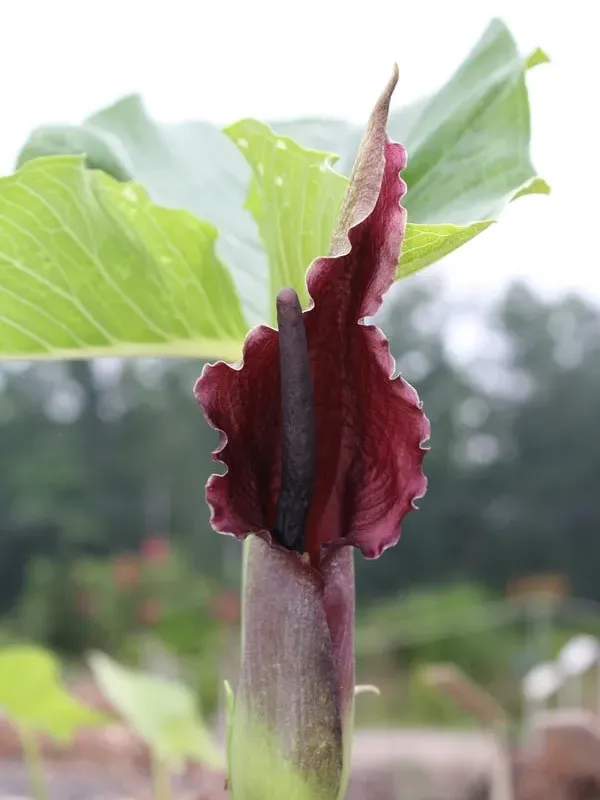
Giant Sauromatum, scientifically known as Sauromatum giganteum, is an impressive ornamental plant belonging to the Araceae family. It is widely recognized for its dramatic foliage and unique, structure-defining inflorescences that mimic tropical flora.
The plant originates from warm, humid regions, meaning its cultivation requires mimicking these native conditions. In colder climates, it is typically maintained in greenhouses or as a seasonal container plant to protect its sensitive tuber.
The soil must be rich in organic matter, loose, and well-draining. A typical potting mix for this species includes peat, pine bark, and perlite, which ensures that excess water drains quickly to prevent tuber suffocation.
Lighting requirements are strictly partial shade. Direct sun exposure can lead to rapid leaf dehydration and bleaching, significantly reducing the plant's aesthetic appeal and overall health during the growing season.
Temperature management is critical for optimal growth. The plant thrives in environments between 20°C and 25°C. During the dormant winter period, the tuber should be stored in a cool, dry place to ensure proper rest before the next cycle.
Main diseases and pests
Common pests affecting Giant Sauromatum include spider mites, thrips, and mealybugs. These pests thrive in dry indoor conditions and can cause severe damage to the foliage if left uncontrolled.
The most significant threat to this species is soft rot of the tuber, typically caused by overwatering or poor drainage. Once established, rot is difficult to treat, often requiring the removal of infected parts and strict hygiene.
Integrated Pest Management (IPM) is the best approach for long-term health. Regularly wiping leaves with a damp cloth helps remove dust and early stages of pest infestations, keeping the plant robust.
If chemical intervention is necessary, systemic insecticides applied as soil drenches or sprays can effectively control populations. Always follow labels to protect the plant's delicate vascular system from toxicity.
Maintaining proper air circulation is essential to prevent fungal outbreaks. Fans or open ventilation help keep the humidity around the leaves at a balanced level without creating stagnant pockets of moisture.