
Sarracenia purpurea
Sarracenia purpurea
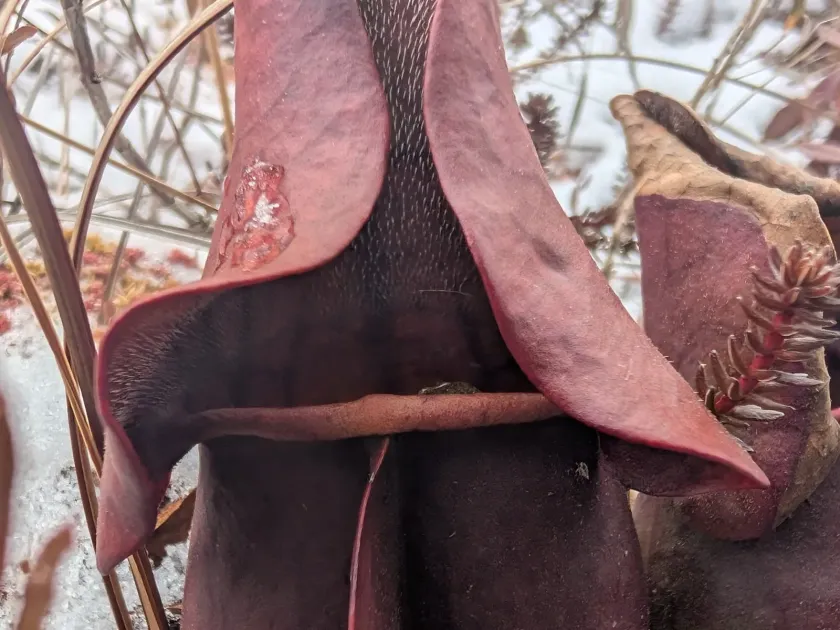
Description
Sowing dates
Propagation of Sarracenia purpurea is primarily achieved through seeds, which require a cold stratification period of at least two months. This mimics the natural winter conditions necessary for successful germination.
Seeds should be sown on the surface of moistened peat moss without being buried, as they require light to trigger germination. Maintaining a high humidity level using a clear cover or tray is essential.
Germination typically occurs within a month under stable temperatures of around +20…+25°C. Once the seedlings emerge, it is vital to provide bright light to prevent them from becoming etiolated.
Transplanting seedlings should be delayed until they are at least one year old to ensure the root system is robust enough to withstand the move. Use only pure, nutrient-free sphagnum peat and perlite.
Vegetative propagation via rhizome division is possible for mature plants. Carefully separate the rhizome sections during the dormant season, ensuring each part has healthy roots and a growth point.
Growing requirements
Sarracenia purpurea is a perennial carnivorous plant belonging to the Sarraceniaceae family, native to the bogs and wetlands of North America. It is uniquely adapted to low-nutrient environments.
The substrate must be highly acidic and free of fertilizers. A classic mix for this culture consists of two parts sphagnum peat moss and one part perlite or horticultural sand for drainage.
Water quality is paramount; only distilled, rain, or reverse osmosis water should be used. Tap water contains minerals that quickly accumulate and cause irreversible damage to the sensitive roots.
Sunlight is a key requirement for the development of the characteristic purple-veined pitchers. Full sun or high-intensity artificial lighting is needed to maintain plant vitality and typical coloration.
A distinct dormant period is necessary for long-term survival. During winter, temperatures should drop to approximately +5°C to allow the plant to rest, reducing the risk of exhaustion and future decline.
Main diseases and pests
Spider mites represent a significant threat to Sarracenia, especially in environments with low air humidity. Regular monitoring of the inner surfaces of the pitchers is recommended to catch infestations early.
Aphids can target the young, tender pitchers during the spring growth flush. Because carnivorous plants are sensitive to chemicals, physical removal or mild organic insecticidal soap is preferred.
Root rot is the most common disease, usually caused by improper soil aeration or water stagnation during the dormant phase. Proper drainage and air circulation are the best preventative measures.
Over-feeding with insects can cause pitchers to rot, particularly if the plant is stressed. It is important not to force-feed the pitchers, as the plant will capture enough nutrients on its own.
Improper winter conditions, such as keeping the plant too warm, can lead to a weak spring emergence, making the plant more susceptible to opportunistic bacteria and fungi.